



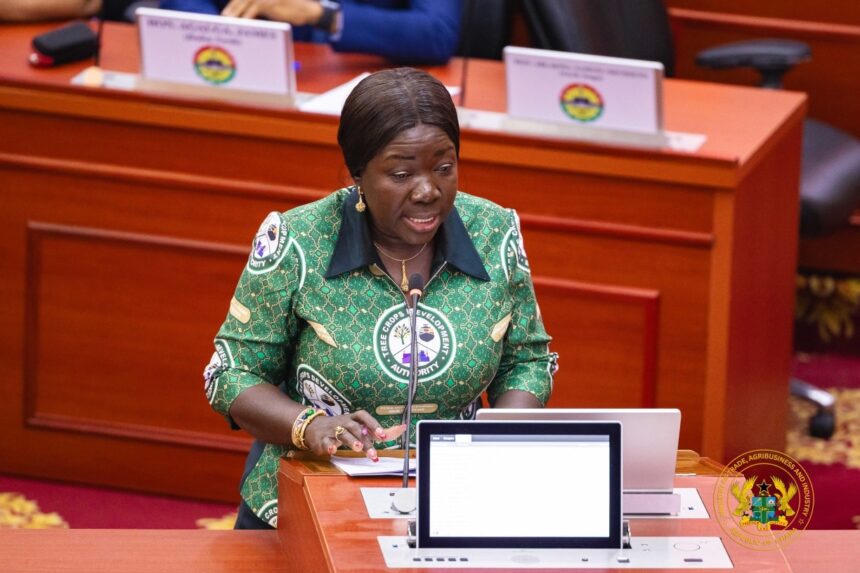
The Minister for Trade, Agribusiness and Industry, Elizabeth Ofosu-Adjare, has called on cement manufacturers in Ghana to increase the use of locally sourced raw materials to reduce the industry’s dependence on imported clinker and promote sustainable cement production.
Speaking at INTERCEM Africa 2026 in Accra, the minister stressed that innovation would be key to the future growth of Ghana’s cement sector, urging industry players to develop cost-effective production methods that maximise the use of local resources.
She highlighted advances in Limestone Calcined Clay Cement (LC3), pointing to the work of CBI Ghana and Ghacem as examples of how manufacturers can reduce clinker consumption while maintaining efficiency and product quality.
According to her, Ghana’s ongoing industrialisation agenda is expected to drive increased demand for cement, making it essential for producers to adopt environmentally sustainable practices and strengthen import substitution efforts.
“The future of the industry lies in innovation and the effective utilisation of our local resources,” she noted.
INTERCEM Africa 2026, organised in collaboration with the Chamber of Cement Manufacturers, Ghana (COCMAG), brought together delegates from about 40 countries and more than 100 companies to discuss emerging trends and challenges in the global cement industry.
Chairman of COCMAG and Chief Executive Officer of CBI Ghana, Frederic Albrecht, explained that Ghana remains heavily reliant on imported clinker because the country lacks sufficient suitable limestone deposits required for clinker production.
He noted that rising fuel costs, port congestion and disruptions in global supply chains have significantly increased the cost of importing clinker, searching for alternative local materials more urgent.
According to him, cement products developed with reduced clinker content demonstrate the potential for Ghana to leverage local resources to improve efficiency, lower production costs and enhance the competitiveness of the industry.
Chief Executive Officer of COCMAG, Bishop Dr George Dawson-Ahmoah, said the conference was focused on promoting a sustainable cement industry capable of supporting Ghana’s economic growth through environmentally responsible production methods.
He revealed that the industry is gradually reducing its reliance on clinker by incorporating clay and other locally available materials into production processes.
Describing the transition as a positive development, he said the shift would help improve sustainability while reducing production costs.
The conference featured discussions on LC3 technology, global cement market trends, net-zero transition strategies, shipping and port challenges in West Africa, as well as developments in the global clinker supply market.
Industry stakeholders expressed optimism that greater adoption of local raw materials could help strengthen Ghana’s cement sector and reduce its exposure to external supply shocks.