



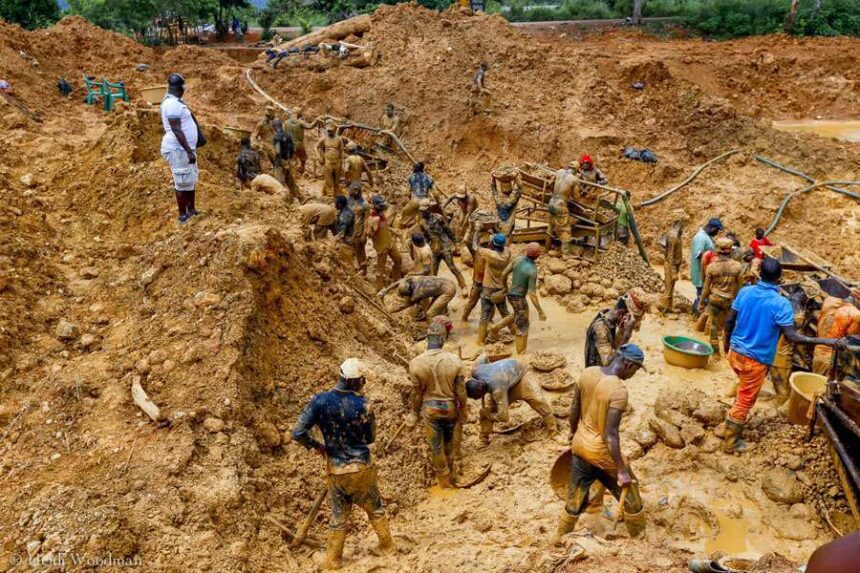
The International Monetary Fund (IMF) has warned that illegal small-scale mining, popularly known as galamsey, poses a serious long-term risk to Ghana’s economy if urgent measures are not taken to address the problem.
In its latest report released on Wednesday, August 5, 2026, the IMF said illegal mining continues to destroy farmlands, forests and water bodies, threatening agricultural productivity while increasing the cost of treating water for public consumption.
According to the Fund, mining activities have degraded soil quality and polluted major rivers, forcing the Ghana Water Company to spend more on water purification.
The IMF cautioned that the environmental damage caused by galamsey could have far-reaching economic consequences, including lower cocoa production, increased flooding and droughts, reduced hydropower generation and slower economic growth.
The report also revealed that an estimated 229 tonnes of artisanal gold valued at US$11.4 billion were smuggled out of Ghana between 2019 and 2024, creating significant discrepancies in the country’s official trade records.
The IMF noted that the figures cover the period before the government introduced reforms, including the removal of taxes on artisanal and small-scale gold mining in 2025 and the establishment of the Ghana Gold Board (GoldBod) to curb illicit gold trading.
Looking ahead, the Fund said GoldBod plans to strengthen oversight of the sector by introducing responsible gold sourcing measures, improved gold traceability systems, enhanced anti-money laundering checks and more transparent gold purchasing processes.
The IMF expressed hope that the reforms will help reduce illegal gold exports, improve transparency in the mining sector and protect Ghana’s economy from the long-term effects of illegal mining.