



The Ghana Revenue Authority (GRA) is aiming to raise about GH¢260 billion in annual revenue by 2028, more than double the GH¢130 billion it collected in 2024.
Commissioner-General Anthony Kwasi Sarpong said the ambitious target would depend largely on the expansion of businesses and industries across the country.
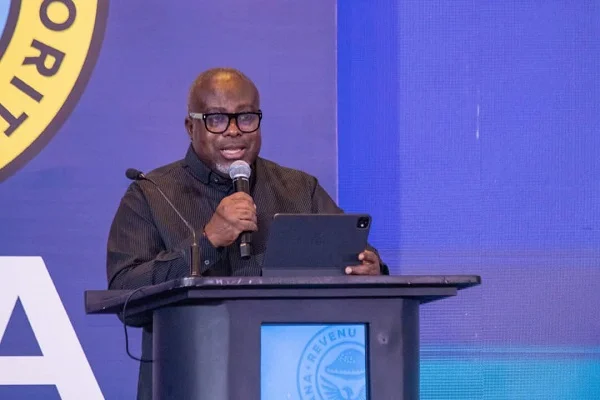
Speaking at the AGI 2026 Industrial and Exhibition Summit, Sarpong said Ghana could increase tax revenue without necessarily increasing existing tax rates.
He explained that when businesses expand, they generate more economic activity that can be taxed, allowing government revenue to grow naturally.
“When your business grows, the nation can collect more without raising a single rate,” he said.
According to the Commissioner-General, the GRA and the private sector therefore have a common interest in building an economy where businesses can grow, invest and create employment.
“GRA succeeds when Ghana’s industries succeed,” he stated.
The Authority is consequently focusing on measures to broaden the tax base, improve compliance and create a more predictable tax environment for businesses.
Sarpong said the GRA is also pursuing legal and technological reforms aimed at making tax administration more efficient. These include greater reliance on digital systems and simpler processes to make it easier for businesses and individuals to meet their tax obligations.
The GRA’s revenue performance has increased significantly in recent years. The Authority collected GH¢130 billion in 2024 before raising its collections to GH¢182 billion in 2025.
For 2026, the GRA has set a revenue target of GH¢225 billion, with Sarpong indicating that the Authority is currently on track to meet the target.
The planned GH¢260 billion target for 2028 would require another substantial increase in annual collections over the next two years.
The GRA expects the continued growth of businesses, expansion of the formal tax base and improved compliance to be central to achieving that goal.
Sarpong’s comments also underline the Authority’s emphasis on economic expansion as a way of increasing government revenue, rather than relying primarily on higher tax rates.