



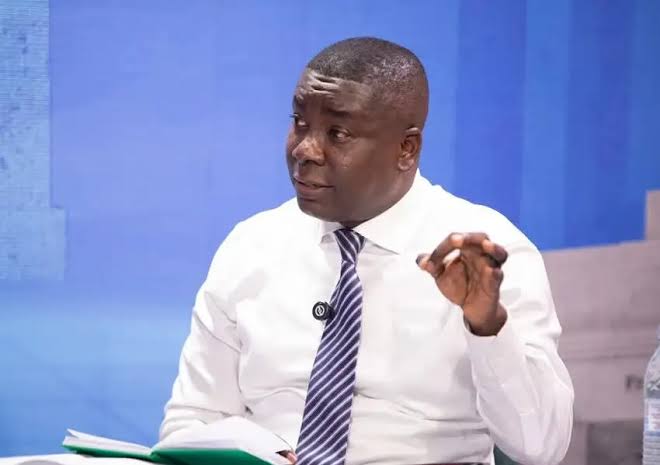
Ghana’s experience with gold as a strategic monetary and reserve asset could form the basis of a new financial model for emerging economies, economist Gideon Boako has argued, crediting former Vice President Dr Mahamudu Bawumia with laying the groundwork for the approach.
In a statement titled “The Bretton Woods is Fraying: Ghana Built a Bridge”, Boako said Ghana’s use of gold-based financial instruments under Bawumia’s leadership demonstrated how commodity-producing countries could use their natural resources to strengthen economic and financial stability.
He pointed to the Domestic Gold Purchase Programme and the Gold-for-Oil Programme as key initiatives, arguing that they helped Ghana navigate severe foreign exchange shortages while supporting the country’s international reserves.
According to Boako, Ghana’s gold reserves increased from eight tonnes to more than 31 tonnes, while gross international reserves exceeded $9 billion by the end of 2024.
He described the development as evidence that gold can play a modern role in monetary and financial systems, rather than simply serving as a traditional store of value.
“Gold is not a relic. It is infrastructure,” Boako stated, describing Bawumia as the architect of what he calls Ghana’s pioneering approach to gold-backed stability.
Boako argued that the model should not be confused with the rigid gold standard used in the 20th century. Instead, he described what he termed the “Bawumia Doctrine” as a hybrid approach built around flexibility, digitisation and development.
Under the model, gold would serve as a backing instrument and liquidity buffer while countries retain floating exchange rates and independent monetary policies.
“Credibility without handcuffs,” he said in outlining the principle.
Boako also linked the approach to digitalisation, arguing that a modern gold framework should be transparent, auditable and capable of being independently verified.
He said digital systems could help strengthen confidence in gold-backed financial arrangements, particularly as countries explore new forms of digital payments and central bank digital currencies.
The economist further argued that gold-backed reserves could have particular significance for commodity-producing countries in Africa, Latin America and Asia.
By directing domestically produced gold into reserves, he said, countries could retain more value within their economies, reduce dependence on external borrowing and provide an additional buffer against currency instability.
Boako believes the changing global financial environment makes such an approach increasingly relevant.
He pointed to concerns over sanctions, frozen sovereign assets, persistent inflation and debt pressures as factors pushing central banks to consider alternatives to excessive dependence on traditional reserve currencies.
He also cited Ghana’s Gold-for-Oil programme as an example of how gold could potentially support commodity trade while reducing exposure to foreign exchange volatility.
According to Boako, the Ghanaian experience offers lessons beyond the country itself.
“For too long, monetary innovation has been exported to Africa, not from it,” he wrote, arguing that Ghana’s experience could contribute to a broader discussion about the future of international finance.
He said the use of gold should not be viewed as a return to monetary systems of the past, but as a potential tool for strengthening economic sovereignty and financial resilience.
Boako further argued that combining gold-backed reserves with fiscal discipline could help Ghana reduce its reliance on repeated IMF programmes.
He maintained that if policymakers followed what he described as the Bawumia Doctrine while also enforcing strict fiscal discipline, including adherence to the Fiscal Responsibility Act and avoiding unbudgeted expenditure, Ghana could potentially break away from its recurring boom-and-bust cycle.
“The Bretton Woods order may be fraying, but the next order is being drafted,” he said, suggesting that gold could form part of that emerging financial architecture.
For Boako, Ghana’s experience under Bawumia demonstrates that gold can be deployed not merely as a reserve asset, but as part of a broader strategy for monetary stability, financial resilience and economic independence.