




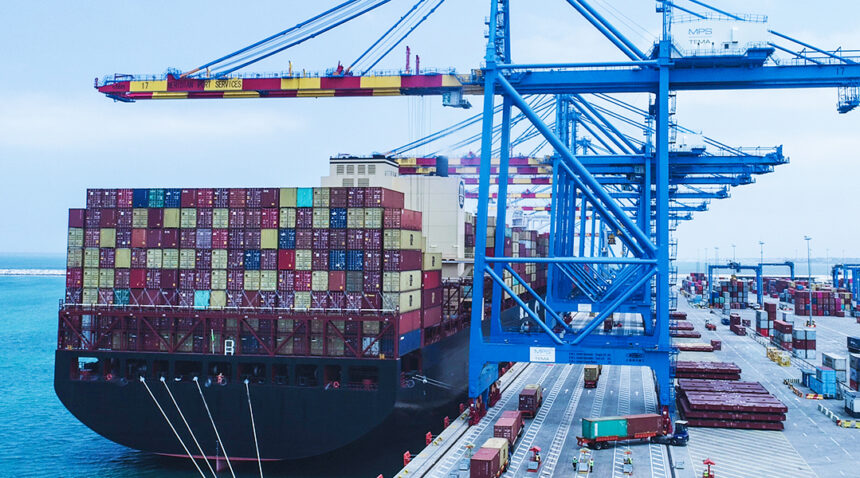
Ghana’s rising import volumes are putting growing pressure on the country’s port infrastructure, with congestion and delays pushing up costs for businesses and, ultimately, consumers.
West Africa Regional Director of CUTS International, Appiah Adomako Kusi, has therefore called for the development of another port terminal to complement existing facilities and ease the strain on the country’s maritime infrastructure.
Speaking on Channel One TV on Wednesday, September 9, 2026, he said Ghana’s port capacity had come under increasing pressure since 2020 as the volume of goods entering the country continued to grow.
According to him, the situation is contributing to delays in cargo clearance and higher demurrage charges for importers.
“When you look at the volume of goods coming to the port and use a six-month moving average, you should know that after 2020, the port would have exceeded its capacity and that a new terminal would have been needed,” he said.
Mr Kusi warned that the financial impact of congestion extends beyond importers, as additional costs incurred at the ports are eventually passed on to consumers through higher prices for goods.
He also highlighted the effect on petroleum products, claiming that around $50 million in demurrage costs associated with petroleum cargo is passed on to fuel prices every year.
Against this backdrop, he urged the government to consider developing an additional terminal to increase capacity and reduce pressure on existing facilities.
He suggested that the project could be pursued through a public-private partnership, allowing private investment to complement government efforts in expanding port infrastructure.
Mr Kusi further stressed the importance of using cargo volume data and projected trade growth to guide future investments in Ghana’s ports.
For him, planning based on the country’s expanding trade volumes would help prevent congestion from becoming an even greater burden on businesses and consumers.
The call comes as Ghana continues to rely heavily on its ports for the movement of imported goods and other critical commodities, making adequate capacity increasingly important to the cost and efficiency of trade.