




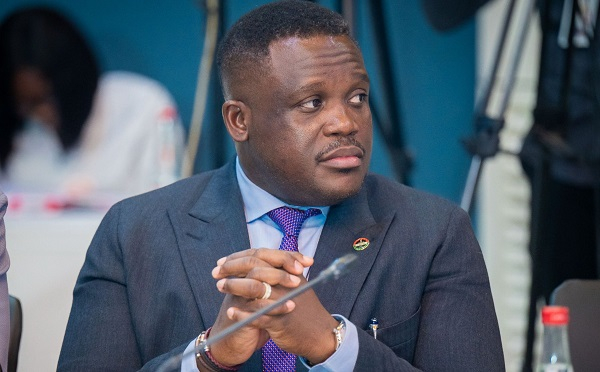
Television stations operating on Ghana’s National Digital Terrestrial Television (DTT) platform will begin paying a monthly fee of US$7,000 from January 2027 under a new government financing framework.
The Minister of Communication, Digital Technology and Innovations, Sam Nartey George, announced the planned charge during Monday’s Accountability Series, saying the new tariff forms part of efforts to create a sustainable financing model for the country’s digital broadcasting infrastructure.
According to the minister, the decision followed an assessment of the existing DTT infrastructure and recommendations from a committee established to examine how the platform could be funded over the long term.
He said the proposed system would combine the new charges with existing government subsidies while introducing a graduated support mechanism to help broadcasters adjust to the new arrangement.
“I set up a committee, and that committee has recommended a sustainable cost-sharing framework and a graduated tariff support mechanism to complement the subsidised national tariff, which will see all TV stations on our DTT platform pay US$7,000 per month during the initial implementation years in a graduated manner,” George said.
The government believes the new approach will help reduce its financial burden while ensuring that the DTT platform remains operational and financially viable.
The National DTT network provides the infrastructure through which television channels are distributed digitally across the country. The introduction of the new fee is therefore expected to affect broadcasters that rely on the platform for transmission.
Beyond broadcasting, the minister also outlined plans to strengthen Ghana’s wider digital governance and regulatory environment.
He disclosed that the government is currently reviewing 15 major pieces of technology-related legislation as part of efforts to modernise the country’s digital sector.
Public and industry consultations have already been completed on 10 of the priority legislative measures, with the government expected to continue work on the remaining bills.
Among the proposed legislation are the Data Harmonisation Bill, the Cybersecurity Authority Bill, the Ghana Innovation and Startup Bill and the National Communications Authority Bill.
The government says the broader legislative reforms are intended to create a stronger regulatory framework for Ghana’s rapidly evolving digital economy while supporting innovation, cybersecurity and the effective management of digital infrastructure.