




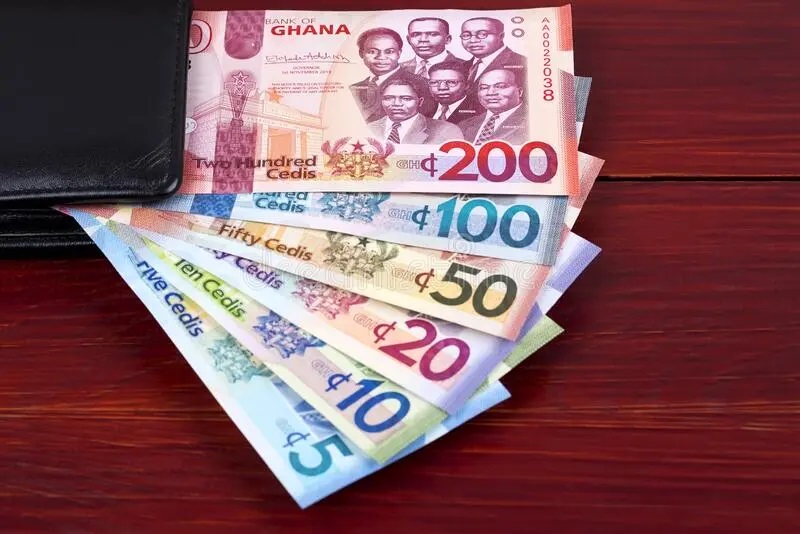
Knowing how to identify a genuine Ghana cedi note can help protect you from accepting counterfeit money.
The notes contain several security features that can be checked without specialised equipment. In most cases, you can examine a note by feeling it, holding it up to the light and tilting it.
Feel the note
Run your fingers over the portrait, edges and denomination numbers.
Genuine cedi notes have raised printing in these areas because the ink is applied more heavily. You should be able to feel a difference between these parts and the smoother sections of the note.
If the entire note feels unusually smooth, it is worth examining it more closely.
Hold it up to the light
Place the note against a light source and check for the watermark and security thread.
You should also look at the registration features, where parts of an image printed on opposite sides of the note align to form a complete image when held up to the light.
If the elements do not line up properly, the note may require further inspection.
Tilt the note
Move the banknote from side to side and watch how its security features respond.
Higher-denomination cedi notes have security features that change or appear to move when the note is tilted. The GH¢100 and GH¢200 notes, in particular, contain 3D security features designed to create a noticeable movement effect.
Check the size
Ghana’s banknotes are produced in different sizes according to their denominations.
Compare the physical size of the note with the expected size for that denomination. A note that appears noticeably different in size should be treated with caution.
Look for hidden features
Some security features are too small to be easily seen with the naked eye.
A magnifying glass can help reveal tiny lettering and microtext printed on the banknote. Ultraviolet (UV) light can also expose security features that are not normally visible under ordinary lighting.
What to do if you suspect a fake note
Never knowingly spend or pass on a banknote you believe is counterfeit.
Instead, report the suspected note to the police or contact the Bank of Ghana for assistance in determining whether it is genuine.
It is also useful to remember where and when you received the note. Such information could help authorities trace the source of counterfeit currency.
The simplest checks to remember are: feel the note, hold it up to the light and tilt it. These basic steps can help you identify suspicious cedi notes before accepting or using them.