



Parliament has passed the Public Tribunals Bill, 2026, despite strong objections from the Minority Caucus and opposition from the Trades Union Congress (TUC).
The new law provides the legal framework for establishing public tribunals under the 1992 Constitution, outlining their jurisdiction, composition and operational procedures. It also creates a Tribunal Oversight Committee to supervise their work.
The legislation is intended to improve access to justice, protect citizens’ rights, strengthen due process and speed up the resolution of cases, particularly those requiring specialised or expedited hearings.
The Bill was introduced on June 26, 2026, by Attorney-General and Minister of Justice Dr Dominic Ayine through the Minister of Lands and Natural Resources, Emmanuel Armah-Kofi Buah, before being referred to Parliament’s Constitutional and Legal Affairs Committee for scrutiny.
Defending the proposal, Dr Ayine said the tribunals would help reduce the growing backlog of cases in the regular courts and improve the delivery of justice.
According to him, Ghana’s courts accumulate about 3,360 backlog cases each year, resulting in lengthy delays.
“The establishment of the tribunals would help reduce this burden and ensure the expeditious disposal of cases,” he said.
He also noted that although Article 142 of the Constitution recognises Regional Tribunals as part of Ghana’s judicial system, they have become inactive in practice. The Bill, he said, is intended to address that gap.
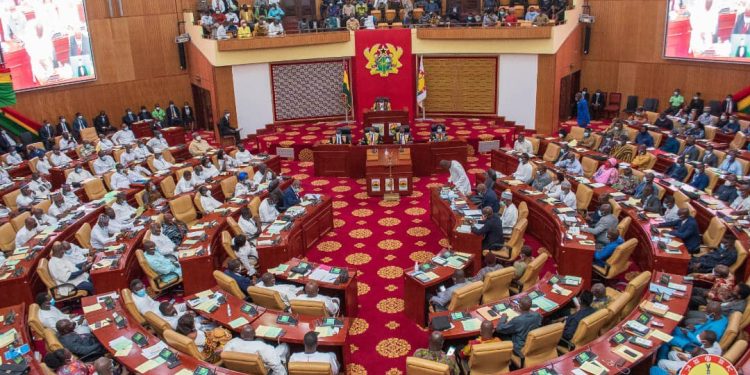
Debate over Clause 4 dominated proceedings before the Bill was passed.
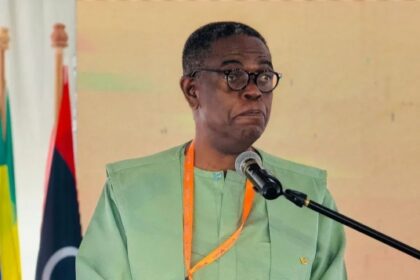
Minority Leader Alexander Afenyo-Markin pushed for the removal of the clause, arguing that it would create confusion within the country’s judicial system. However, Majority Leader Mahama Ayariga rejected the proposal and insisted Parliament would complete consideration of the Bill.
First Deputy Speaker Bernard Ahiafor, who presided over the sitting, put the proposed amendment to a voice vote, which the Majority defeated. After Afenyo-Markin demanded a headcount, the results showed 16 MPs voting in favour of deleting Clause 4, while 135 voted against it.
The Minority subsequently walked out of the chamber, refusing to participate in the remaining stages of the Bill.
During the debate, Afenyo-Markin argued that the legislation would create a parallel judicial system not envisaged under the Constitution.
He maintained that Ghana already has a clearly established court hierarchy, comprising the District Courts, Circuit Courts, High Courts, Court of Appeal and Supreme Court, and argued that any shortcomings should be addressed by strengthening the existing system rather than creating another one.
The Minority Leader also raised concerns about the composition of the proposed tribunals, noting that while the chairperson must be a lawyer, the remaining two panel members could be non-lawyers despite hearing criminal cases.
He further referred to legal arguments previously advanced by Dr Ayine in the Republic v. Tagor and Issa Abbas case, where the Attorney-General, then in private practice, successfully argued that criminal convictions must be based on credible evidence proving every essential element of an offence. According to Afenyo-Markin, the Court of Appeal upheld that principle, reinforcing the need for justice to be based on evidence rather than public perception.
“It is not about how the public perceives an individual because that can be misleading. What we see in this whole exercise is the creation of a system where people could be pronounced guilty even before their cases are properly determined,” he said.
He also argued that the proposed tribunal system does not provide adequate procedural safeguards to ensure fairness.
Afenyo-Markin added that opposition to the Bill extended beyond the Minority, pointing to concerns raised by civil society organisations and organised labour, including the TUC.
He further referenced the tribunal system that operated during the Provisional National Defence Council (PNDC) era, claiming it had been used to target individuals, confiscate assets and enrich some tribunal members.