



The United States Embassy in Ghana has defended its request for access to health data under a proposed bilateral health compact, insisting that the arrangement was consistent with international practices and did not require the disclosure of patients’ personally identifiable information.
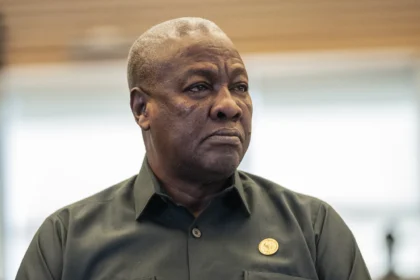
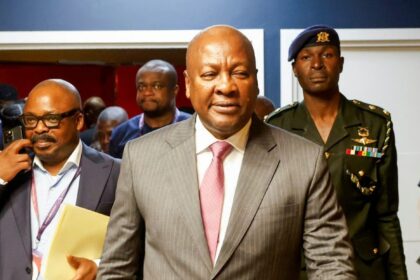
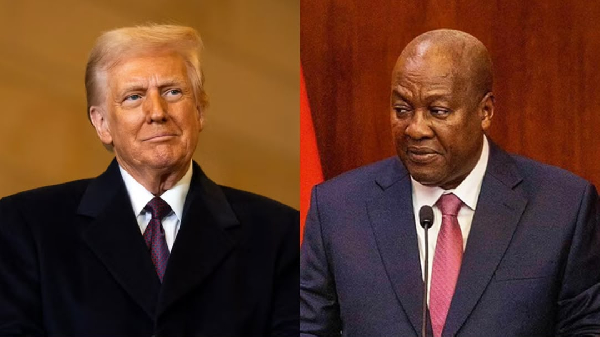
The clarification follows Ghana’s decision to reject the proposed agreement after Cabinet raised concerns over health data, counterpart funding and the regulatory powers of the Food and Drugs Authority (FDA). President John Dramani Mahama subsequently described aspects of the proposed deal as “humiliating.”
Speaking on behalf of the US Embassy in Ghana, Rolf Olson said Washington’s intention was to strengthen Ghana’s ability to manage its own health programmes rather than undermine the country’s sovereignty.
“Our intention has always been to strengthen our partners’ sovereignty. Contrary to some reporting, we did not immediately pull the plug and cut off all health assistance in one fell swoop,” he said.
Olson said the United States invested $82 million in Ghana’s health sector during the first year of the new Trump administration and provided another $53 million in fiscal year 2026.
He added that the US had also been assessing a final multimillion-dollar instalment for fiscal year 2027.
However, he said the failure of Ghana and the United States to conclude the bilateral health Memorandum of Understanding meant Washington was moving towards phasing out support for some existing programmes.
US explains health data request
One of the main issues surrounding the proposed agreement has been the US request for access to health information generated in Ghana.
Ghanaian authorities raised concerns about the provisions, while President Mahama said the proposed compact required Ghana to provide its pathogen profile and medical records.
Olson, however, said the US was seeking aggregate health information rather than data that could identify individual patients.
“Unfortunately, we did not conclude a bilateral health MOU with Ghana this year. As such, we are now in the process of phasing out our support for existing programmes in alignment with the government of Ghana’s push for health sovereignty and country-led global health reform,” he said.
He added that the proposed agreements sought aggregate health data without personally identifiable information, comparing the arrangement with data-sharing practices under the US-funded President’s Emergency Plan for AIDS Relief (PEPFAR) and other international health partnerships.
According to Olson, such data is used to assess health programmes, measure their impact and determine whether interventions are achieving their intended objectives.
He also said the proposed MOUs contained provisions for the sharing of pathogen specimens as part of international cooperation on disease surveillance and response.
“The MOUs also include provisions for the sharing of pathogen specimens, which is similar to coordination efforts in the fight against Ebola,” he said.
US highlights $2.2bn health investment
The US Embassy also pointed to the scale of its health-related investment in Ghana, arguing that the proposed changes should be viewed within the context of years of cooperation between the two countries.
Olson said the United States had invested $2.2 billion in Ghana’s health sector and related areas since 2012.
“We are proud of what our multibillion-dollar investment has been able to achieve, and the number is multibillion. Just since 2012, we have invested $2.2 billion in Ghana in these areas,” he said.
He said the investment had gone beyond financial assistance, arguing that US-supported programmes had helped save lives, enabled people to contribute to Ghana’s economy and strengthened relations between citizens of the two countries.
“But more than that, we think about the thousands of lives saved, people who are now able to contribute to Ghana’s economic development and our strong people-to-people ties,” he added.
Months of negotiations
Olson said Ghana and the United States spent months discussing the proposed agreement, with both sides negotiating over areas of concern.
“Part of the process of discussing the draft MOU was a period of negotiations, which we engaged in here quite robustly and quite, I think, in good faith on both sides over a period of months to work out those particular details,” he stated.
Ghana ultimately decided not to conclude the bilateral health MOU, with the government choosing to pursue greater health-sector self-reliance while maintaining engagement with international partners.
Despite the disagreement, Olson said the United States remained open to further discussions with the Ghanaian government.
“We’re always open to discussion with our good partners in the government of Ghana. And so the door is always open in that regard to discuss topics of mutual interest,” he said.
The disagreement over the proposed compact comes amid a broader US policy shift towards country-led health financing and greater self-reliance among partner countries, while several African governments have raised concerns over data-sharing requirements in similar agreements.