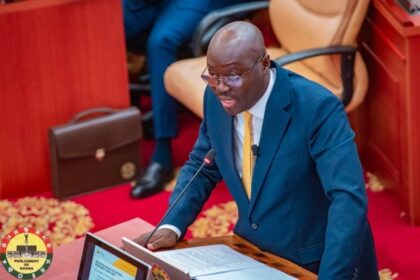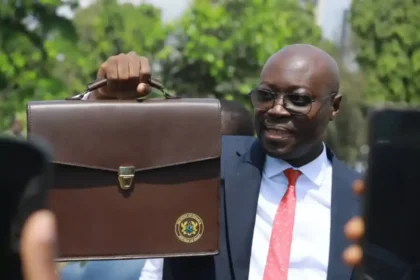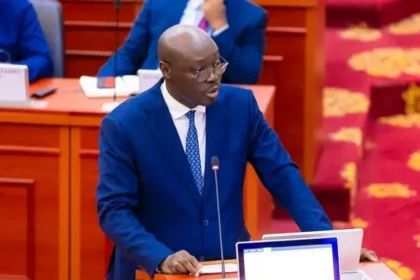





Minister of Government Communications, Felix Ofosu Kwakye, has outlined the differences between the NDC government’s 24-hour economy initiative and its proposed New Economy programme, explaining that the two policies have separate objectives and implementation strategies.
Speaking in an interview with Joy News ahead of the presentation of the 2027 Budget on November 12, 2026, the Abura-Asebu-Kwamankese MP said the initiatives may overlap in some areas but are designed to address different aspects of Ghana’s economic development.
According to him, the 24-hour economy is primarily a private sector-focused initiative intended to encourage businesses to operate beyond conventional working hours through government incentives.
He explained that the policy seeks to help companies introduce shift systems, extend their operating hours and expand their operations, creating more employment opportunities in the process.
“The 24-hour economy, even though it is a government initiative, is primarily aimed at the private sector. So, the government said that we think this economy can work in a manner that it does not sleep and that it can run around the clock. To be able to do that, we need to provide incentives to private sector companies, mostly, who can then take advantage of it, expand their businesses, and in the process employ more people,” he said.
Ofosu Kwakye disclosed that about 33 major private businesses and companies had registered with the 24-hour economy secretariat, with some already adopting aspects of the initiative ahead of the government’s planned incentives.
He also pointed to public institutions that have introduced round-the-clock operations and shift systems, including the Ghana Ports and Harbours Authority (GPHA), Ghana Publishing Company Limited and the Driver and Vehicle Licensing Authority (DVLA).
He said the GPHA had introduced a shift system that allows customers to clear goods at night, a move he said had resulted in the recruitment of an additional 1,400 workers.
At the Ghana Publishing Company Limited, he indicated that the introduction of a shift system under the new management had helped the institution retain 100 workers who would otherwise have lost their jobs.
New Economy focuses on long-term investment
Turning to the New Economy programme, Ofosu Kwakye described it as a long-term government strategy aimed at changing the structure of Ghana’s economy through targeted investments in selected sectors.
He explained that the programme would involve setting aside US$10 billion to finance specific growth pillars, to move the country away from dependence on raw material exports towards an economy that produces more value-added goods and services.
“The new economy is a government programme lasting for years, through which 10 billion dollars will be set aside to finance specific growth pillars to transform the structure of our economy, make us a value-added economy and also ensure that through the process we create quality jobs for Ghanaians,” he stated.
He said the initiative was also intended to address Ghana’s recurring economic difficulties by supporting sustained investment in critical sectors, improving economic stability and raising living standards.
According to him, the programme seeks to reduce the cycle of economic crises that has repeatedly led Ghana to seek financial assistance from the International Monetary Fund (IMF).
“The new economy essentially revolves around government investment in critical areas that will ensure that we grow our economy on a consistent, more reliable, predictable basis and then through that churn out quality jobs for the teeming youth of this country.
“Through that also, we give our people a much better standard of living, and then move away from this perennial, cyclical economic crisis that we fall into,” he said.
Ofosu Kwakye stressed that the two initiatives should not be treated as the same policy.
While the 24-hour economy is designed to stimulate private sector activity and create jobs by encouraging businesses to operate around the clock, the New Economy programme is a broader, long-term government investment plan intended to transform Ghana’s economic structure and support sustainable growth.