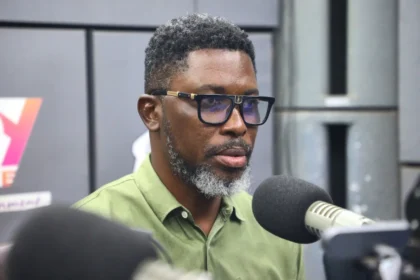




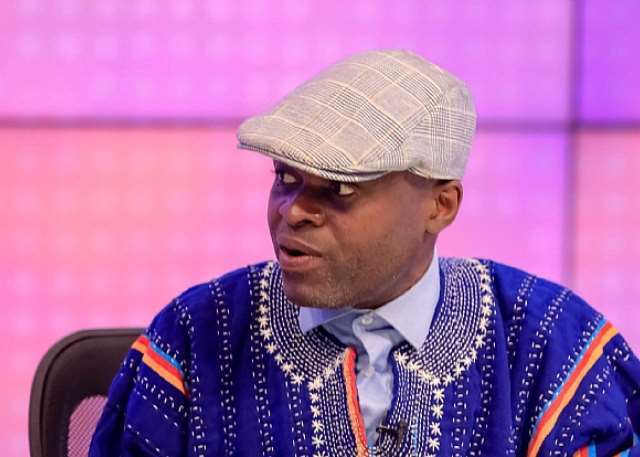
Private legal practitioner Martin Kpebu has said the New Patriotic Party’s (NPP) next opportunity to return to government could come in 2032, based on what he described as Ghana’s recurring political cycle.
Kpebu argued that the pattern between the country’s two major political parties makes an NPP return to power in the next four years unlikely.
Speaking to Isaac Addae on Morning Starr on Starr FM, he said even dissatisfaction with the current administration would not necessarily lead him to support the NPP or its flagbearer, Dr Mahamudu Bawumia, in the next election.
“Worst case, if I’m not happy with them, the worst case is not to appear. That’s, I won’t go and vote. But I cannot turn around in four years and go and vote for Bawumia. I don’t know how I can support Bawumia in four years,” he said.
Kpebu maintained that, based on the political cycle he was referring to, the NPP’s next realistic opportunity to return to government would be in 2032.
“So what the argument I’m building is that if anything at all, the NPP’s chance to really return will be 2032,” he stated.
His comments also formed part of his response to suggestions that his political engagements could be motivated by expectations of personal benefits from politicians, particularly those in opposition.
Kpebu questioned why he would wait several years for an opposition leader to potentially return to power when he could approach the administration currently in office if he needed assistance or an opportunity.
“So why would I be waiting for the next six years when I can go and beg right now for something? I mean, do I look that foolish?” he asked.
He argued that it would make little sense for him to seek assistance from an opposition leader whose return to government was uncertain when he could instead engage the administration currently in power.
Kpebu also rejected suggestions that his political engagements are driven by financial considerations, pointing to his involvement in the ORA report as an example.
According to him, he and others who worked on the report were not paid for their work and even covered basic expenses themselves.
“And for the records, the ORA report, we didn’t take one cedi. One cedi, even fuel, we didn’t take. We went to work with our own fuel, water, etc. We didn’t take one cedi,” he said.
Kpebu said his willingness to engage political actors should therefore not be interpreted as an attempt to secure personal benefits.
He maintained that if his objective were to obtain an opportunity or assistance, he would engage the government currently in office rather than depend on an opposition leader whose return to power could take several years.
His comments reflect his own assessment of Ghana’s political cycle and should not be taken as a prediction of the outcome of future elections.