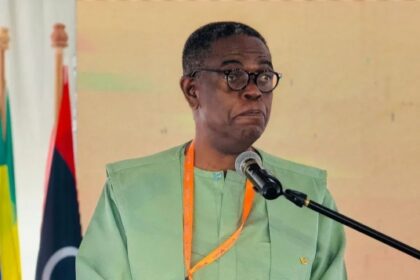





Legal practitioner Amanda Akuokor Clinton has questioned the manner in which Ghanaian socialite Abu Trica was extradited to the United States, warning that Ghana must not become a “rubber stamp” for foreign prosecutions.
In a Facebook post following Abu Trica’s extradition on July 9, 2026, Clinton said her concerns were not about defending alleged fraud but about whether the extradition process complied with Ghana’s laws and constitutional safeguards.
“This is not about defending fraud. Ghana must never become a hiding place for people accused of romance fraud, cyber fraud, money laundering, or any form of transnational crime. If a person has a case to answer, let them answer it. But extradition is not supposed to be automatic. It is not a matter of America asking and Ghana simply handing someone over,” she wrote.
Clinton questioned the speed of the extradition, noting that although the process reportedly began around July 2 and the law provided a window for further legal action, Abu Trica was flown out of the country before outstanding legal issues appeared to be resolved.
She also cited reports that on July 8, Abu Trica’s lawyer was asked by Bureau of National Investigations (BNI) officials to return the following morning, only to discover that his client had already been extradited.
“If that account is correct, the State owes Ghanaians a clear explanation,” she said.
Clinton stressed the importance of habeas corpus protections, arguing that once a person is extradited, Ghanaian courts can no longer provide effective legal remedies.
“Once a person is put on a plane and sent abroad, Ghanaian courts can no longer give any meaningful protection. The matter becomes practically irreversible,” she wrote.
She also raised several questions about the process, asking whether any pending stay application was heard before Abu Trica was extradited, whether his lawyer had adequate access to him, and whether the required ministerial surrender warrant was properly issued.
“If an emergency application had already been fixed for hearing, and the person was removed before the hearing could serve any useful purpose, then the issue becomes more troubling. The question is whether the State followed the letter of the law while defeating the protection the law was meant to provide,” she stated.
Clinton further cautioned against turning extradition into a political bargaining tool between countries.
“Ghana does not need a crude ‘Abu Trica for Ofori-Atta’ exchange. Extradition should never become human barter. One person’s liberty should not be traded for another person’s political usefulness,” she wrote.
She called for Ghana to modernise its extradition and mutual legal assistance laws to address contemporary challenges such as cybercrime, digital evidence and cross-border financial offences.
“Ghana must not be a safe haven for fraudsters. But Ghana must also not become an airport transit point for foreign prosecution. There is a difference between cooperation and submission,” she concluded.