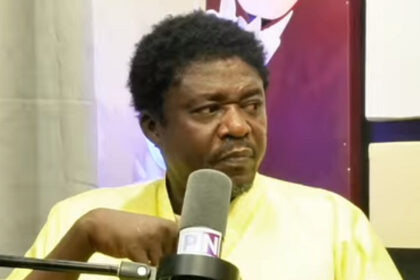





Lawyer Andy Appiah-Kubi, counsel for Ashanti Regional New Patriotic Party (NPP) Chairman Bernard Antwi-Boasiako, popularly known as Chairman Wontumi, has dismissed claims that his client’s decision to seek plea negotiations in the Exim Bank case amounts to an admission of guilt.
Speaking on Asempa FM on June 11, 2026, Appiah-Kubi explained that Ghana’s plea bargaining framework is built on the constitutional principle that every accused person is presumed innocent until proven guilty.
“Opting for a plea bargain doesn’t mean the person is guilty. We opted for plea bargain and have not yet started discussions on the terms, but why is the Attorney-General impugning their own motives?” he questioned.
Chairman Wontumi recently submitted a formal request to begin plea negotiations with the Attorney-General in connection with his criminal trial over an alleged GH¢14.3 million loan fraud case involving the Ghana Export-Import Bank (EXIM Bank).
Appiah-Kubi noted that plea bargaining is governed by Act 1079, which amended portions of the Criminal and Other Offences (Procedure) Act.
“The Plea Bargaining Act comes as Act 1079. Section 162 of the previous Act has been amended and captured as 162A on plea negotiations. This law came into effect on July 22, 2022,” he stated.
According to him, many misconceptions surrounding plea bargaining stem from limited public understanding of the law.
“It’s not everyone that knows this provision,” he said.
He explained that the legislation allows negotiations that could potentially result in the withdrawal of charges against an accused person.
“The plea agreement under Section 162A(1)(b) is to withdraw all the charges against the accused person, which is one of the expectations of the negotiations,” he said.
Appiah-Kubi further pointed to legal provisions requiring prosecutors to inform accused persons of their rights before plea discussions begin.
“Section 162A(2)(a) says the prosecutor shall, before the commencement of plea negotiations, inform the accused person of the right to be presumed innocent until proven guilty,” he stated.
He stressed that applying for plea negotiations should not be interpreted as an admission of wrongdoing.
“So there is no way that anyone who applies for plea negotiations admits guilt or is guilty. That’s not what the law says,” he stressed.
The lawyer revealed that discussions on the terms of a possible agreement have not yet started and questioned why conclusions are already being drawn about the outcome.
“For now, we haven’t met to design the terms of negotiations, so why are we in a hurry to prescribe one of them for us when we haven’t indicated a preference?” he asked.
He argued that if the process ultimately leads to the withdrawal of charges, claims of a conviction would be misplaced.
“If the negotiated position is the withdrawal of the charges, then where is the conviction?” he quizzed.
Appiah-Kubi urged the public to better understand the legal framework governing plea bargaining and avoid speculation.
“We need to understand these things because the speculation is worrying. It is not fair,” he added.