



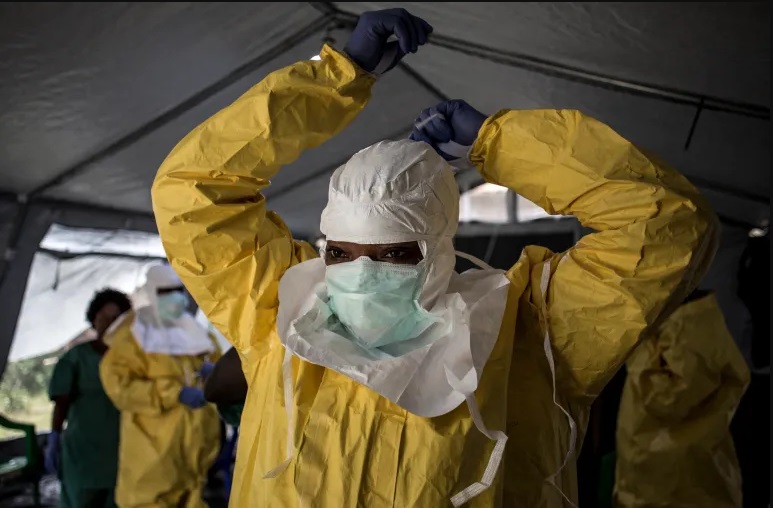
The World Health Organisation (WHO) has declared the latest Ebola outbreak in the Democratic Republic of the Congo (DRC) and neighbouring Uganda a “public health emergency of international concern” after nearly 90 people died from the virus.
The outbreak, which began in the eastern DRC province of Ituri, involves the rare Bundibugyo strain of Ebola, a variant for which there is currently no approved vaccine or specific treatment.
Health officials say the outbreak now poses a serious regional threat after infections spread into Uganda and linked cases were detected in Kinshasa, the capital of the DRC.
Although the WHO raised its second-highest alert level, it stopped short of declaring the outbreak a pandemic, stating that the situation does not yet meet the required criteria.
According to Africa’s Centres for Disease Control and Prevention (Africa CDC), the outbreak was first reported in Ituri province near the borders with Uganda and South Sudan. As of Saturday, authorities had recorded 88 deaths and 336 suspected cases.
The outbreak reportedly began in Mongwalu, a busy mining town, before infected individuals travelled to other locations and unknowingly spread the virus.
DRC Health Minister Samuel-Roger Kamba said the outbreak’s first known patient was a nurse who arrived at a hospital in Bunia on April 24, showing Ebola-like symptoms.
Uganda has since confirmed two laboratory cases linked to travellers from the DRC, including one death in Kampala.
“The number of cases and deaths we are seeing in such a short timeframe, combined with the spread across several health zones and now across the border, is extremely concerning,” Trish Newport of Doctors Without Borders (MSF) said.
Ebola is a severe viral disease first identified in 1976 near the Ebola River in what is now the DRC. It spreads through direct contact with the bodily fluids of infected persons or contaminated materials.
Symptoms include fever, vomiting, diarrhoea, weakness, muscle pain, and in severe cases, internal and external bleeding.
The current Bundibugyo strain was first discovered in Uganda in 2007 and is considered highly dangerous.
“It has a very high lethality rate, which can reach 50 percent,” Kamba said.
The WHO has urged neighbouring countries to strengthen border screening, isolate confirmed cases, and monitor contacts daily, while advising exposed individuals to avoid international travel for 21 days.
However, the organisation cautioned against closing borders, warning that such actions could encourage informal crossings and make containment efforts more difficult.
The DRC has recorded at least 17 Ebola outbreaks since 1976, including the deadly 2018–2020 outbreak that killed nearly 2,300 people.
Health experts say ongoing armed conflicts, weak healthcare systems, and high population movement in eastern DRC could further complicate efforts to contain the virus.