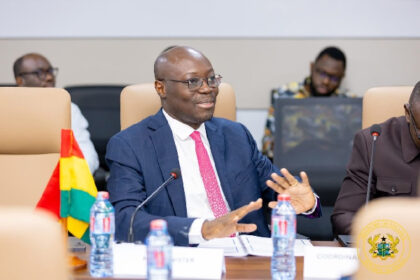




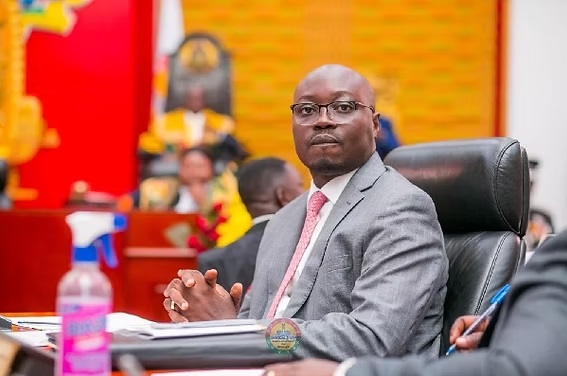
Finance Minister Dr Cassiel Ato Forson has ruled out compensation for bondholders who suffered losses under Ghana’s Domestic Debt Exchange Programme (DDEP).
Speaking at a joint press briefing in Accra on Friday to announce the completion of Ghana’s US$3 billion IMF-supported programme, the minister acknowledged that the debt restructuring exercise was painful for many investors and citizens but stated that there was no agreement requiring the government to reimburse affected bondholders.
“I do not recall that there is something of the sort that calls on the people of Ghana for the Ghanaian government to give some form of compensation. I do not know the details of an agreement that was signed between those who suffered, unfortunately, a loss of investment,” he said.
Dr Forson explained that he was unaware of any legal or contractual obligation that would make the state liable for compensation payments to investors who accepted haircuts during the 2022/2023 debt restructuring exercise.
“So we do not have any certain liability on us based on what was agreed to,” he added.
Ghana implemented the DDEP as part of efforts to restore economic stability and secure support from the International Monetary Fund (IMF) after the country’s public debt rose to about US$63 billion, representing nearly 88 percent of GDP by the end of 2022.
The programme restructured approximately GH¢137 billion in domestic bonds, with over 95 percent participation from bondholders.
According to government figures, the restructuring helped reduce public debt to 56.6 percent of GDP by the end of 2024, while inflation dropped from a peak of 54.1 percent to 3.4 percent in April 2026.
The Finance Minister assured Ghanaians that the government would now focus on sustaining fiscal discipline and creating jobs through a new economic recovery initiative.
He disclosed that a flagship programme called “The New Economy” would soon be launched to support sectors with high employment potential.
IMF Mission Chief for Ghana, Ruben Atoyan, defended the debt restructuring programme, saying it was necessary to stabilise the economy and create fiscal space for growth.
He noted that the IMF’s new Policy Coordination Instrument, which replaces the Extended Credit Facility, would focus on maintaining fiscal discipline and preventing future debt risks.