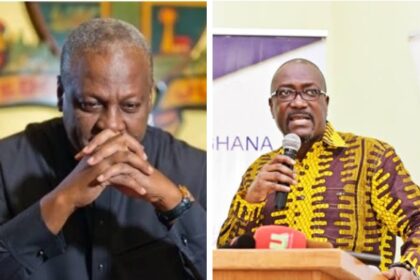





Former Director of Communications at the Office of the late President John Evans Atta Mills, Samuel Koku Anyidoho, says he is disappointed by the latest cocaine seizure involving a consignment that originated from Ghana.
Reflecting on the development, Anyidoho recalled how he and the National Democratic Congress (NDC) used previous drug-related incidents to mount political pressure on the administration of former President John Agyekum Kufuor.
Anyidoho said that between 2006 and 2008, when he served as Director of Communications for then-candidate Atta Mills’ campaign team, he played a central role in the party’s messaging around the MV Benjamin cocaine scandal and the “Limping Man” incident.
According to him, the NDC’s communication strategy at the time included branding the Kufuor administration as having turned Ghana into a “cocaine coast”.
“To be frank, between 2006 and 2008, when I was the Director of Communications for Candidate Atta Mills’ campaign team, President Kufuor was in office. During that period, there was the MV Benjamin cocaine scandal and the ‘Limping Man’ incident. I was at the forefront of those issues, and we did not take it easy on President Kufuor,” he said.
“As part of our political communication strategy, I was the one who came up with the idea that we should tag President Kufuor as having turned Ghana into a cocaine coast and it worked.”
Anyidoho said the strategy contributed to the political pressure placed on the then Kufuor administration, but he now finds it painful to see a major cocaine-related incident involving a consignment from Ghana under an NDC government.
“And so this current cocaine thing, it hurts me on that side of the political divide that the party that fought cocaine sometime ago and now under our dispensation, this kind of thing is happening,” he stated.
He also questioned whether the individuals who have been arrested or identified in connection with the shipment represent the full network behind the operation.
Anyidoho argued that moving such a large quantity of cocaine through a container would likely involve multiple people at different stages, from loading to transportation and international movement.
“Smuggling drugs is not easy. To smuggle almost four tonnes, put it in a container and have it leave the country means there must be a chain involved. It cannot be the work of one person; there is a chain,” he said.
He therefore called for investigators to look beyond individuals who may have been directly apprehended and establish whether others were involved in facilitating the shipment.
The comments come after French authorities seized a major cocaine consignment at the Port of Dunkirk on September 7, 2026.
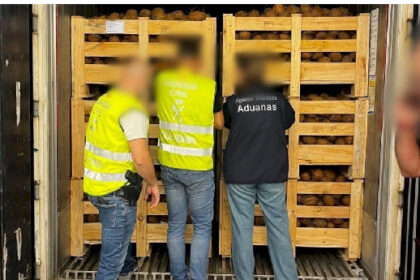
According to the information provided, French Customs intercepted a container carrying plastic waste that originated from Ghana and was bound for Antwerp, Belgium. Authorities discovered 167 bales of cocaine weighing approximately 3.9 tonnes, with an estimated street value of €225 million, or about US$261 million.
French authorities said the seizure followed investigations by judicial police into the network behind the shipment. France’s National Jurisdiction against Organised Crime subsequently opened an investigation into suspected organised importation of narcotics and criminal association.
Dutch newspaper De Telegraaf and Belgian newspaper HLN have also linked the seizure to fugitive Dutch national Jos Leijdekkers, popularly known as “Bolle Jos”.
Leijdekkers, 33, is wanted by European authorities and was sentenced in absentia to 24 years in prison in the Netherlands for cocaine trafficking. Dutch authorities believe he is hiding in Sierra Leone.
The Ghana-linked seizure has since triggered political debate, with questions being raised over how such a large quantity of cocaine was loaded into a container originating from Ghana and moved through international ports.