



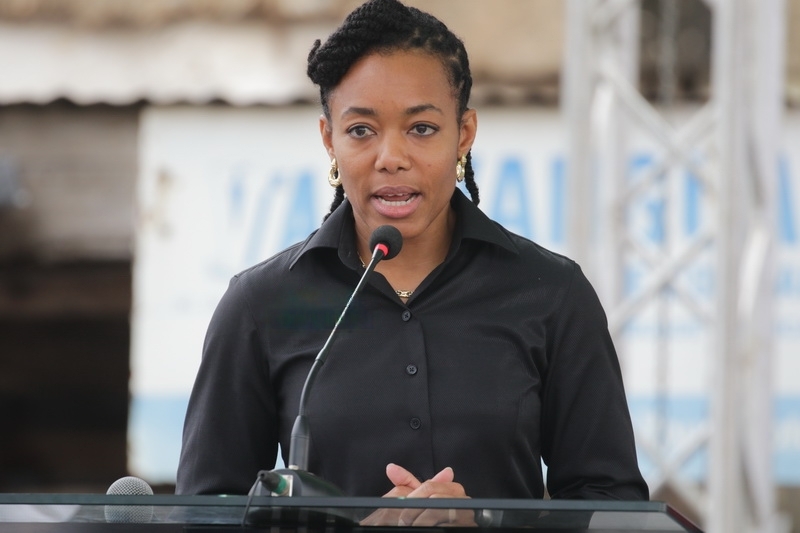
Minister for Environment, Science and Technology Dr Zanetor Agyeman-Rawlings has urged Parliament to consider establishing a National Sex Offenders Register following the recording of 1,462 sexual offence cases in Ghana in 2025.
Speaking on the floor of Parliament on Tuesday, November 10, 2026, she called for stronger measures to protect children and other vulnerable people, arguing that the country’s response to sexual abuse must go beyond public condemnation and existing legal provisions.
Figures presented by the minister showed that Ghana recorded 1,132 defilement cases and 297 rape cases in 2025. There were also 10 attempted defilement cases, 16 attempted rape cases and seven cases involving carnal knowledge of a female with mental incapacity.
These figures brought the total number of reported sexual offence cases for the year to 1,462.
Dr Agyeman-Rawlings cautioned that the statistics covered only incidents officially reported and registered, meaning the actual scale of sexual abuse could be higher.
She noted that fear, intimidation, stigma and pressure from families and communities often discourage victims from reporting abuse or pursuing justice.
The minister also criticised what she described as a recurring cycle of public outrage whenever sexual abuse cases emerge, followed by a return to normalcy once media attention fades.
“We cannot continue to express outrage whenever another child is violated, only to return to business as usual when the headlines fade,” she told Parliament.
“Our children should not have to be extraordinarily brave simply to be safe,” she added.
She argued that a National Sex Offenders Register would improve accountability and help prevent convicted offenders from moving between communities and institutions without appropriate scrutiny.
Under the proposal, authorised institutions could use the register to conduct background checks and take preventive steps, particularly in settings where children and other vulnerable people are exposed to potential risks.
However, Dr Agyeman-Rawlings stressed the need for a clear legal framework to govern the system. She said safeguards would be necessary to protect due process and individual rights, ensuring that the register distinguishes between people accused of sexual offences and those convicted by a competent court.
She also called for entries to be based on lawful convictions and for appropriate data protection measures to prevent the misuse of sensitive personal information.
The proposal comes amid wider concerns about the handling of sexual abuse cases and delays in securing justice for survivors.
A study by the Foundation for Security and Development in Africa (FOSDA), reported by Graphic Online in October 2026, found that 2,172 defilement cases were filed in Ghanaian courts between 2020 and 2025, with 886 still pending.
The study further indicated that 1,286 cases were concluded during the period, taking an average of 329.1 days to resolve.
The findings have added to concerns about delays in the justice system and the difficulties survivors face in obtaining timely outcomes.
Dr Agyeman-Rawlings called for a stronger national commitment to protecting vulnerable people, insisting that sexual abuse must never be tolerated or excused.
“Let us restore accountability, let us restore our moral compass and let us send an unequivocal message to the sexual abuse of children that the sexual abuse of children will not be tolerated nor excused in our society,” she said.