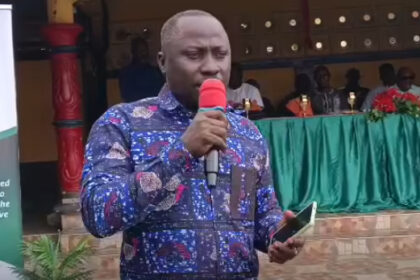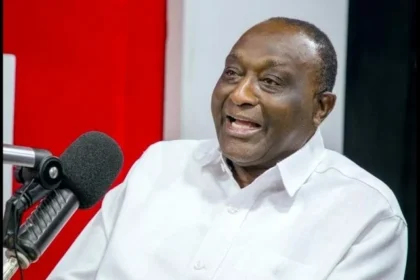





National Democratic Congress (NDC) National Chairman Johnson Asiedu Nketiah has described Ghana’s current asset declaration regime as ineffective, arguing that it does little to combat corruption due to its lack of transparency.
Speaking in an interview with the YouTube-based Ambassador TV on August 1, 2026, Asiedu Nketiah said asset declaration has the potential to be a powerful anti-corruption measure. Still, the country’s existing system has failed to achieve that objective.
According to him, the process has become an expensive exercise that produces little value because the declarations are never subjected to public scrutiny.
“Asset declaration can be an effective tool in the fight against corruption, but the way it is practised in Ghana today does not serve that purpose. It only wastes resources without producing meaningful results,” he stated.
He explained that public officials are required to submit details of their assets to the Auditor-General, but the declarations are sealed and remain inaccessible unless a court orders them to be opened during legal proceedings.
Asiedu Nketiah argued that this arrangement makes it impossible to verify whether officials have truthfully declared all their assets.
“Once the documents are submitted, they are sealed and kept away. Only the person who filed the declaration knows what is inside, while the public has no way of confirming whether everything was declared,” he said.
He added that the absence of public disclosure defeats the purpose of asset declaration, noting that none of the declarations he has filed since entering politics has ever been examined or discussed.
“If the declarations are not made public, then the exercise serves no real purpose. The Auditor-General simply stores the documents until a court requests them,” he remarked.
The NDC chairman maintained that meaningful reforms are needed to make the asset declaration regime more transparent and effective in tackling corruption.
He insisted that, in its current form, the system cannot be relied upon as a credible anti-corruption mechanism.
His remarks come against the backdrop of President John Dramani Mahama’s public declaration of his assets on February 18, 2025, in accordance with the Constitution and the Public Office Holders (Declaration of Assets and Disqualification) Act, 1998 (Act 550).
The President also directed all ministers and political appointees to declare their assets by March 31, 2025, stressing that the process should promote transparency and serve as a preventive measure against corruption rather than remain shrouded in secrecy.