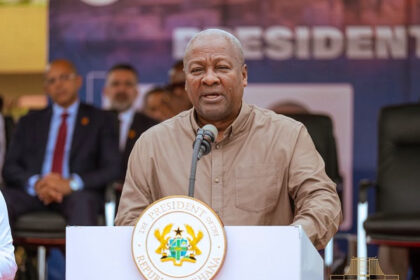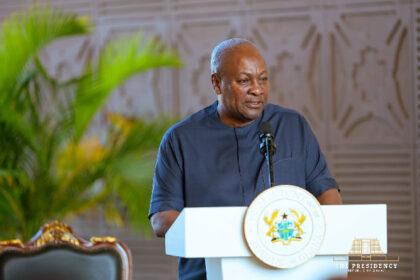




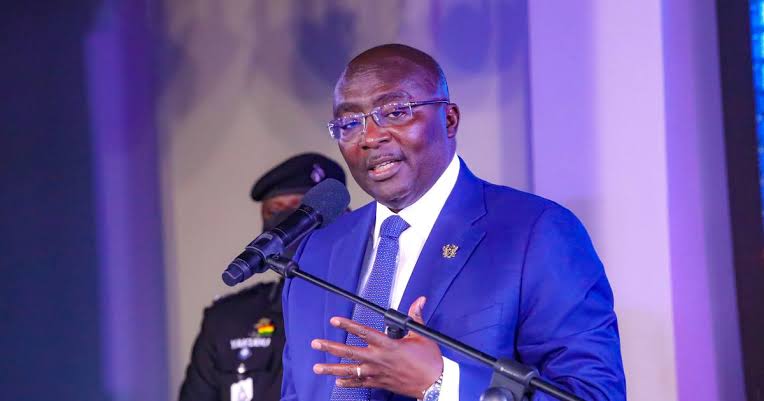
Former Vice President Dr Mahamudu Bawumia has explained the circumstances that led to the introduction of the Gold-for-Oil and Gold-for-Reserves programmes during his time in government.
Speaking in Accra during an engagement with members of the Ghana National Association of Small-Scale Miners, Dr Bawumia said the initiatives were developed in response to two major economic challenges that confronted Ghana.
According to him, the first was the sudden disruption in access to external financing following the economic effects of the COVID-19 pandemic and the Russia-Ukraine war.
“That tap (external financing) was shut for Ghana and quite a few countries. And for us, it resulted in a balance of payments crisis,” he said.
He explained that the situation was compounded by restrictions under Ghana’s IMF programme, which, according to him, limited the Bank of Ghana’s capacity to intervene in the foreign exchange market to a maximum of $80 million per month.
“You can imagine what the demand for foreign exchange for Ghana would be on a monthly basis. Significantly more than $80 million a month. And so, in that framework, there was only one result. Because when demand exceeds supply, prices would go up, isn’t it? The cedi started depreciating daily,” he said.
Dr Bawumia said the Gold-for-Oil programme was therefore conceived as an alternative way of securing fuel without placing additional pressure on Ghana’s scarce dollar reserves.
Under the arrangement, gold was used to facilitate the procurement of petroleum products, helping to reduce the country’s dependence on foreign exchange for fuel imports.
He said the Gold-for-Reserves concept emerged from a similar concern over Ghana’s reliance on foreign exchange generated from other commodities.
Dr Bawumia recalled questioning why Ghana, despite being a major gold producer, should depend on exporting commodities such as cocoa to generate dollars for its reserves.
“Why does Ghana, which mines gold every day, have to export cocoa to get dollars for its forex reserves? Why not buy the gold we already produce with cedis?” he asked.
He described the idea as an unconventional approach that required policymakers to move beyond established economic models.
“It was not a textbook idea. There’s no textbook in economics that will tell you about the Gold-for-Reserves programme,” he said.
According to Dr Bawumia, he subsequently presented the proposal to the Bank of Ghana, which spent almost a year conducting due diligence because of the unusual nature of the policy.
He said officials initially had concerns about the risks involved in adopting a programme without an established precedent.
“Finally, they agreed, and Ghana became the first country in Africa, and probably the world, to implement such a programme. Now, other countries are coming to learn from Ghana,” he said.
Dr Bawumia said the two initiatives were ultimately intended to find alternative ways of managing Ghana’s foreign exchange constraints and making greater use of the country’s gold resources.