



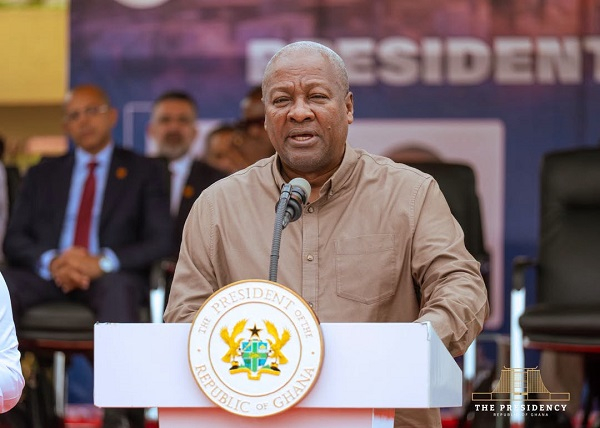
President John Dramani Mahama has announced plans to recruit about 40,000 young Ghanaians into the country’s security services between 2025 and 2028, saying applicants who missed earlier opportunities could still be considered in subsequent recruitment exercises.
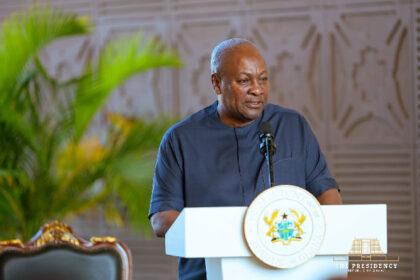
Speaking at a town hall meeting in Goaso, the Ahafo Regional capital, the President said about 12,000 people were recruited into various security agencies in 2025, with further exercises planned over the next three years to meet the target.
“From 2025 to 2028 we will recruit about 40,000 youth in the security services, so those who could not get recruited may have the opportunity to be selected in the coming years,” he said.
Mahama encouraged unsuccessful applicants to remain hopeful but stressed that candidates would still need to satisfy the required qualifications and pass interviews and medical examinations.
He disclosed that the Ghana Armed Forces had recruited more than 5,000 personnel since his administration assumed office, while the Ghana Police Service had taken on approximately 4,000 recruits.
The Ghana Immigration Service, Ghana Prisons Service and Ghana National Fire Service had also recruited about 2,000 personnel, according to the President.
He said the government intended to increase recruitment quotas across the security agencies from 2026 to 2028 to accommodate more qualified applicants.
Mahama explains purpose of citizen engagement
The announcement was made during the Resetting Ghana citizen engagement, which brought together traditional authorities, opinion leaders and residents to discuss government performance and development concerns.
Mahama described accountability as a fundamental principle of democracy, saying elected governments had a responsibility to answer to the people who entrusted them with power.
He said the engagements also offered residents an opportunity to express their grievances and draw attention to challenges facing their communities.
Chiefs could gain greater role in local governance
The President also reaffirmed his commitment to strengthening the participation of traditional authorities in local governance.
He recalled his 2024 election campaign promise to review the powers of chiefs and give them a greater role in administering their communities.
According to Mahama, the ongoing constitutional review process provides an opportunity to consider concerns raised by traditional leaders.
He said he had engaged the National House of Chiefs and encouraged the institution to submit proposals to the constitutional review committee.
Some proposals, he noted, had been incorporated into recommendations under consideration, including expanding representation in district assemblies to accommodate traditional authorities, young people, women and other interest groups.
The proposed changes are intended to broaden participation in local governance and give chiefs a stronger voice at the district level.
Goaso to get a new regional hospital
On healthcare, Mahama announced plans to construct a new regional hospital in Goaso as part of the government’s commitment to developing hospitals in the six newly created regions.
He said the new facility would improve access to specialised healthcare in the Ahafo Region.
The existing Goaso Hospital, he explained, would not be abandoned but renovated and maintained as a municipal hospital after the new facility is constructed.
“We are going to construct a brand new hospital in Goaso,” he said.
Responding to a request for an infectious disease centre, the President said he would engage the Regional Minister to examine the matter.
Three psychiatric hospitals planned
Mahama also announced plans to construct three additional psychiatric hospitals in Kumasi, Tamale and the Volta Region to expand access to specialised mental healthcare.
He said the proposed Kumasi facility would serve the middle belt, including Ashanti, Ahafo, Bono and Bono East, while the Tamale hospital would cater for the northern part of the country.
The proposed facility in the Volta Region is also expected to improve access to mental health services.
The President further disclosed that the government had initiated measures to expand training for specialised nurses, including those required for critical care, operating theatres and psychiatric services.
He said selected nursing training institutions would focus on producing professionals with the specialised skills needed to address gaps in the healthcare system.
Mahama encouraged young people to consider specialised nursing, noting that trained professionals could find employment both in Ghana and abroad.
The announcements formed part of the government’s broader development agenda, covering employment, traditional leadership, healthcare infrastructure and specialised medical training during the engagement with residents of the Ahafo Region.