



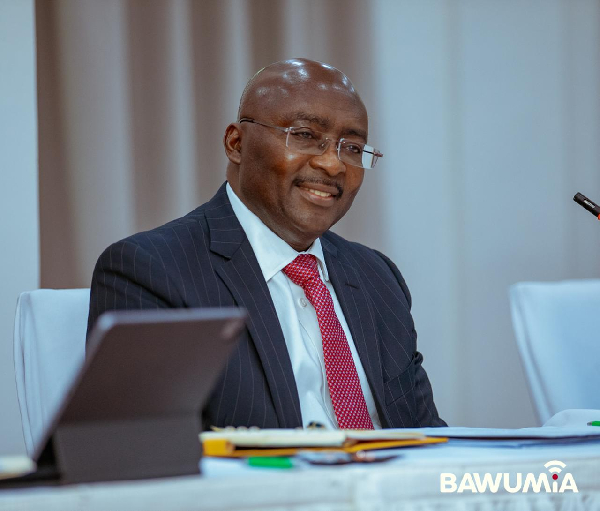
New Patriotic Party (NPP) flagbearer Dr Mahamudu Bawumia has called for legislation to protect workers from potential job losses as artificial intelligence (AI) and automation continue to transform workplaces.
He acknowledged that AI could improve productivity, efficiency and service delivery but warned that its rapid development could also put jobs and workers’ financial security at risk.
Dr Bawumia made the remarks during an engagement with the Trades Union Congress (TUC), where discussions centred on labour concerns, economic transformation and the future of employment.
Describing the growing influence of AI as a “frightening prospect” for workers, the former Vice-President noted that machines and software applications were increasingly capable of performing tasks traditionally handled by human employees.
He said businesses across the world were embracing automation to reduce operational costs and improve productivity, leaving several occupations vulnerable to technological disruption.
According to him, Ghana must prepare for the possible consequences rather than wait until the technology has significantly reshaped the labour market.
Dr Bawumia called for a national strategy that would allow the country to benefit from AI while ensuring that workers were not left behind.
“Artificial Intelligence should be a tool to complement human labour and not a substitute for it,” he said.
He proposed collaboration among government, organised labour, employers and technology experts to develop laws and regulations that would protect workers without discouraging innovation.
He also stressed the importance of retraining, reskilling and continuous education, arguing that workers needed opportunities to acquire the skills required to remain relevant in an increasingly digital economy.
The NPP flagbearer encouraged labour unions to take an active role in national discussions on AI, saying workers must have a voice in decisions that could affect their jobs and future livelihoods.
He further expressed concern that Africa’s youthful population could face worsening unemployment if technological advancement moved faster than investment in education and human capital development.
Dr Bawumia said deliberate policies were needed to ensure that the economic benefits of AI were shared widely rather than deepening existing inequalities.
He maintained that with appropriate legislation, investment in skills development and cooperation among key stakeholders, Ghana could embrace technological advancement while protecting employment and preserving the dignity of work.