



President John Dramani Mahama has credited reforms in Ghana’s gold sector with increasing foreign exchange earnings, strengthening the country’s reserves and helping to stabilise the cedi.
He said the mining industry, particularly small-scale gold production, had become an important contributor to Ghana’s economic recovery following measures introduced to improve the regulation and export of gold.
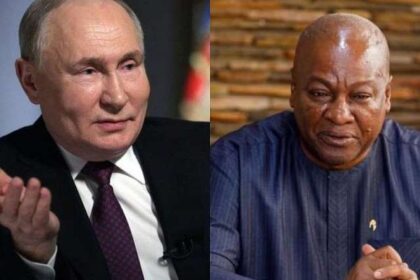
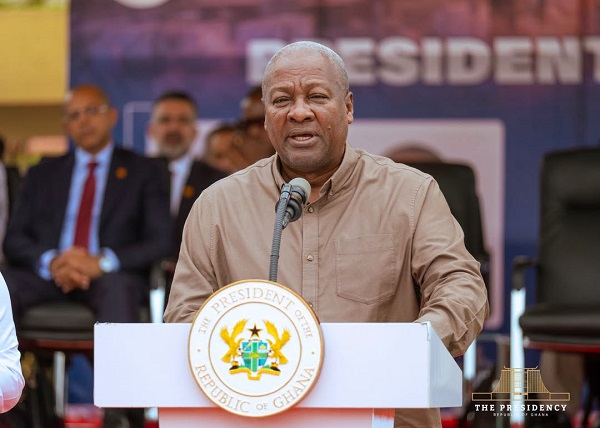
Speaking during an engagement with Ghanaians in Moscow, Russia, on Thursday, October 29, 2026, the President pointed to the establishment of the Ghana Gold Board (GoldBod) as a major part of the reforms.
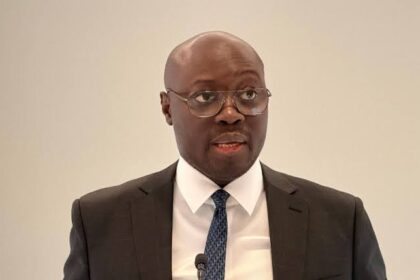
He also defended the attention surrounding the GoldBod and its Chief Executive Officer, Sammy Gyamfi, saying the sector’s growing economic importance had made it a major subject of public discussion.
“One sector that has proved very transformational to our economy is mining, especially gold, and so naturally that’s why everyone’s attention is on it. So ‘Poor’ Sammy Gyamfi has been the focus of attack, especially by the Minority,” he said.
Mahama explained that the idea of establishing the Gold Board had been developed before the 2020 general elections and further refined ahead of the 2024 polls.
He said his administration was therefore prepared to move quickly with the necessary legislation after assuming office to strengthen oversight of gold exports and ensure that foreign exchange earnings were brought back into the country.
“And so as soon as we hit the ground, we knew exactly what we wanted to do. We had the legislation ready. We had prepared the legislation for the Gold Board,” he stated.
To demonstrate the impact of the intervention, the President cited an increase in small-scale gold exports from 64 tonnes in 2024 to 104 tonnes in 2025.
He also said foreign exchange earnings from the sector rose from approximately US$4.6 billion in 2024 to US$10.8 billion in 2025.
The figures are consistent with earlier remarks by Mahama and GoldBod, which reported that small-scale gold exports increased to about 104 tonnes in 2025, with the US$10.8 billion representing foreign exchange generated during the year.
According to Mahama, the increased inflows have helped improve the availability of foreign currency in the economy, supported the accumulation of foreign reserves and contributed to the stability of the cedi.
“And so, of course, that has helped to stabilise the cedi because there’s availability of forex. And aside from that, it has helped us to increase our foreign reserves,” he said.
Beyond gold, the President disclosed that Ghana was also engaging Russian investors over potential investments in the country’s bauxite and aluminium industries.
He identified a gap in the existing production chain, explaining that Ghana exports raw bauxite but imports alumina, which is then processed at the Volta Aluminium Company (VALCO) to produce aluminium for export.
“We export the raw bauxite. And then we import alumina to VALCO. And then VALCO produces aluminium and exports the aluminium. And so there’s a missing link there,” he explained.
Mahama said discussions with potential investors were aimed at attracting investment into bauxite refining, which would allow Ghana to process more of its mineral resources locally.
The proposed investment, he suggested, would help address the gap in the country’s aluminium production chain and reduce its reliance on exporting raw mineral resources.
His remarks reflect the government’s broader push to increase the economic returns from Ghana’s mineral wealth through stronger regulation, improved foreign exchange retention and greater local processing.
See the video below: