




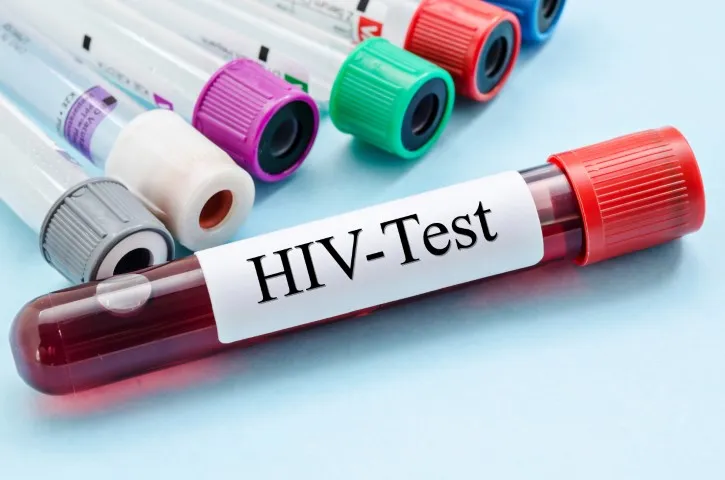
More than 68,000 people are currently living with HIV in the Ashanti Region, according to the Ghana AIDS Commission’s 2025 HIV Estimates, underscoring the region’s continued struggle with one of the country’s most significant public health challenges.
The report shows that 68,354 people are living with HIV in the region, the second-highest figure in Ghana after Greater Accra, which recorded 77,512 cases.
Ashanti also registered 2,852 new HIV infections during the reporting period, again ranking second nationally behind Greater Accra’s 3,141 new cases. The figures suggest that while progress has been made over the years, new infections continue to emerge across communities in the region.
District-level data reveals notable differences in HIV prevalence across Ashanti. Asokwa recorded the highest adult HIV prevalence among people aged 15 to 49 years at 3.25 per cent, followed by Juaben at 2.95 per cent, Offinso at 2.68 per cent, Asante Akim North at 2.62 per cent, and Old Tafo at 2.47 per cent.
Mining communities also recorded relatively high prevalence rates. Obuasi posted 2.22 per cent, while Obuasi East and Bekwai recorded 2.01 per cent and 2.14 per cent respectively, reflecting the relationship between population mobility, economic activity and HIV vulnerability.
At the other end of the spectrum, Sekyere Kumawu recorded one of the lowest prevalence rates at 0.65 per cent, followed by Asokore Mampong at 0.75 per cent and Adansi Asokwa at 0.79 per cent. The variations highlight the need for targeted interventions that address the specific needs of individual communities.
Across the country, the report estimates that 337,435 people were living with HIV in 2025. During the same period, Ghana recorded 13,951 new HIV infections and 12,051 AIDS-related deaths.
National adult HIV prevalence among people aged 15 to 49 years stands at 1.40 per cent, meaning Ashanti’s regional average remains above the national level.
The report also indicates that national antiretroviral therapy (ART) coverage stands at 57.6 per cent for adults aged 15 years and above, while coverage for children aged up to 14 years remains lower at 39.6 per cent.
Meanwhile, Prevention of Mother-to-Child Transmission (PMTCT) coverage reached 98.9 per cent nationwide, reflecting continued efforts to reduce HIV transmission from mothers to their babies.
Ghana’s progress towards the global 95-95-95 HIV targets currently stands at 70 per cent, 81 per cent and 92 per cent, showing continued advancement while highlighting the work still needed to end HIV as a public health threat by 2030.
Ashanti Regional Technical Coordinator of the Ghana AIDS Commission, Olivia Graham, said the findings should encourage renewed action rather than discourage communities.
She called for increased community-based HIV testing, stronger support for people receiving treatment and sustained efforts to eliminate the stigma surrounding people living with HIV, particularly in districts with the highest burden of infections.