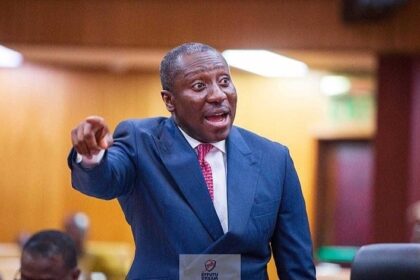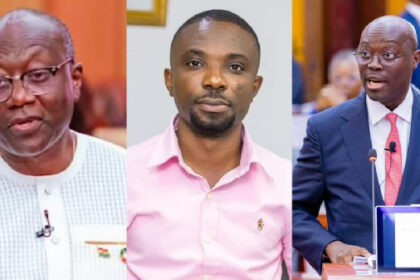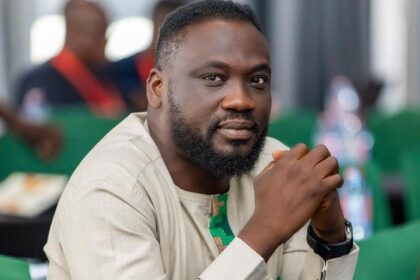





Bolgatanga Central MP Isaac Adongo has challenged former Finance Minister Mohammed Amin Adam over his comments on Ghana’s rising public debt, arguing that the previous administration left the current government with significant repayment obligations.
Speaking during parliamentary debate on the 2027 Budget Statement on Friday, November 20, 2026, Adongo questioned why Dr Amin Adam was raising concerns about the country’s debt-to-GDP ratio when the previous government had left behind substantial debts for the current administration to manage.
According to the NDC lawmaker, Finance Minister Dr Cassiel Ato Forson is expected to mobilise approximately GH¢154 billion between 2027 and 2030 to settle principal repayments on debts inherited from the previous administration.
“The man who left that debt for Ato Forson is here complaining about debt to GDP increasing by 2%,” Adongo told Parliament.
He also criticised the Domestic Debt Exchange Programme (DDEP), which was introduced under the previous administration as part of efforts to restructure Ghana’s public debt.
Adongo argued that the reduction in the country’s debt figures came at a considerable cost to individuals and institutions whose investments were affected by the restructuring exercise.
“If to reduce public debt is to call Ghanaians, who you owe, and take GH¢60 billion from their money under DDEP, who will not reduce their public debt?” he asked.
The Bolgatanga Central MP further recalled comments reportedly made by Amin Adam after the conclusion of Ghana’s debt restructuring exercise in London, when the former minister indicated that the country’s exchange rate would begin to stabilise.
Adongo said the current administration was now working to meet inherited debt obligations while also implementing measures aimed at stabilising the cedi.
He maintained that the financial commitments left behind by the previous government continued to place pressure on the country’s finances, making it necessary to consider the inherited debt burden when assessing the current administration’s economic management.
The exchange forms part of the wider parliamentary debate on Ghana’s public debt, with lawmakers from both sides of the House raising questions about borrowing, debt servicing and the government’s fiscal decisions.
See the video below: