




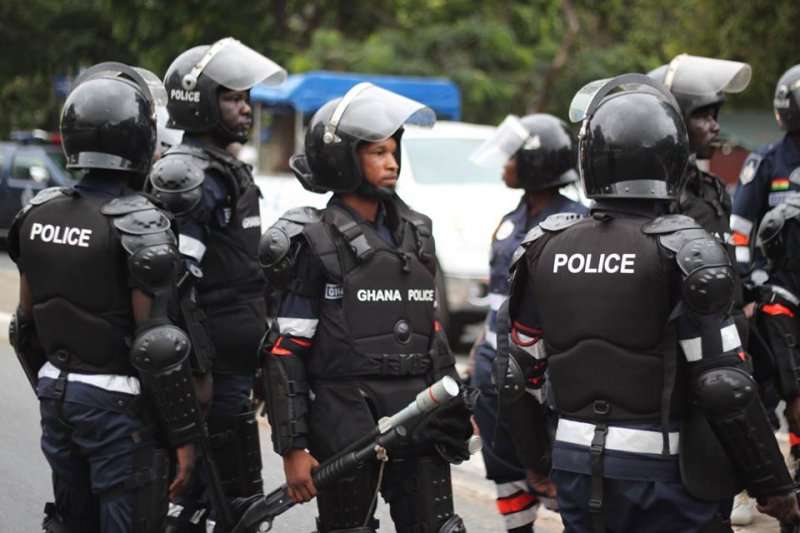
Attorney General and Minister of Justice Dr Dominic Ayine has directed the police and other law enforcement agencies to respect the constitutional rights of suspects, warning that officers who engage in unlawful arrests, prolonged detention, torture or extortion could face disciplinary and legal consequences.
In a directive dated November 2, 2026, Dr Ayine outlined a set of rules governing how criminal investigations should be conducted, including procedures for arresting, detaining, interrogating and charging suspects.
A key provision requires law enforcement officers to ensure that suspects are brought before a court within 48 hours of their arrest. The period, according to the directive, must be calculated from the actual time of arrest.
The Attorney General also made it clear that bail is free and that police officers must not demand money, gifts or favours from suspects or their relatives in exchange for their release.
The directive is intended to address investigative practices that fall short of constitutional standards and strengthen accountability within Ghana’s criminal justice system.
Dr Ayine warned that his office would not support prosecutions built on evidence obtained through torture, intimidation, coercion or other unlawful methods.
He further indicated that the Office of the Attorney General could refuse to prosecute or discontinue cases where serious violations of the law had compromised the integrity of the evidence or the prosecution.
“Every criminal investigation in Ghana must be conducted within the boundaries set by the Constitution and the criminal laws of Ghana. An investigation that breaches a suspect’s fundamental rights wrongs that person.
“It also undermines effective prosecution, exposes the Republic to claims for compensation, and erodes public confidence in the criminal justice system,” he stated.
The directive establishes minimum operational standards for investigators and introduces reporting and accountability requirements to ensure that cases referred for prosecution are supported by lawfully obtained and admissible evidence.
It also prohibits the practice of parading suspects before the media or taking photographs of people in police custody for publication.
On interrogation, the AG stressed that officers must not use torture, threats or intimidation to obtain confessions. Suspects must also be given access to legal representation, while evidence obtained through unlawful methods may be excluded during trial.
Dr Ayine has additionally directed heads of security and investigative agencies to take disciplinary action against officers found to have violated the rules.
“Where a breach of this Directive is established, the head of agency shall take disciplinary action under the agency’s governing enactment and regulations and report the action taken to the Attorney-General,” he emphasised.
The directive further requires law enforcement agencies to submit quarterly reports to the Attorney General. These reports must include cases involving detention beyond 48 hours and allegations of abuse by officers.
Investigators have also been instructed to bring complex and high-profile cases, including homicide, corruption, organised crime and money laundering, to the attention of the Attorney General’s Office.
Other provisions restrict the interception of communications, access to stored communications and data, and electronic surveillance without the necessary court authorisation or approval under the relevant law.
The directive also states that no person should be arraigned for a private trial or indictment without the Attorney General’s consent.
Emphasising the need to protect individual liberty, Dr Ayine stated that detention should be an exception rather than the default approach to criminal investigations.
Where investigations can continue without keeping a suspect in custody, officers are expected to release the individual on enquiry bail. Any bail conditions imposed must be reasonable and proportionate to the alleged offence and the suspect’s circumstances.
The AG also warned that officers involved in unlawful arrests, detention and torture could face civil and criminal liability.
The new rules form part of broader efforts to strengthen Ghana’s criminal justice system, improve police accountability and ensure that the rights of suspects are respected throughout the investigative and prosecution process.