



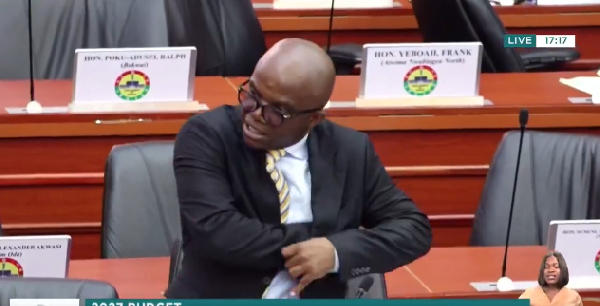
Nhyiaeso MP Dr Stephen Amoah has questioned whether the government’s economic policies are benefiting ordinary Ghanaians, insisting that improvements in key economic indicators have yet to translate into relief for households and businesses.
Speaking during parliamentary debate on the 2027 Budget on November 18, 2026, the Deputy Ranking Member of Parliament’s Finance Committee argued that many Ghanaians were still struggling financially despite what he described as positive developments in the country’s macroeconomic performance.
He directed his criticism at the governing National Democratic Congress (NDC), saying the party’s major economic policies promised before the 2024 general elections had not sufficiently addressed the difficulties ordinary citizens face.
According to Dr Amoah, some of the key sectors that drive the economy and directly affect people’s livelihoods were still experiencing declines.
He argued that the performance of these sectors raised questions about whether the reported improvements in the broader economy were making a meaningful difference in people’s daily lives.
“The most important sectors that are driving the economy of this country, impacting lives and connecting primary and secondary macro indicators are declining,” he told Parliament.
He further challenged the government to look beyond the headline economic figures and consider the financial situation of ordinary Ghanaians.
“You stated it; I’m not the one. So, what we are saying is that when it comes to the major economic policies of the NDC that they dreamt of, that they told Ghanaians they would implement, even though the primary macro indicators are doing well, Mr Speaker, look at my pocket. Mr Speaker, look, see my pocket. There is no money. Mr Speaker… I don’t have a wallet,” he said.
The Nhyiaeso MP’s remarks formed part of the wider parliamentary debate on the 2027 Budget, during which lawmakers examined the government’s economic performance and the extent to which its policies were improving living conditions.
His comments highlighted the disagreement between the government and opposition over how the country’s economic progress should be assessed, particularly whether improvements in macroeconomic indicators are being felt by households and businesses.
See the video here: