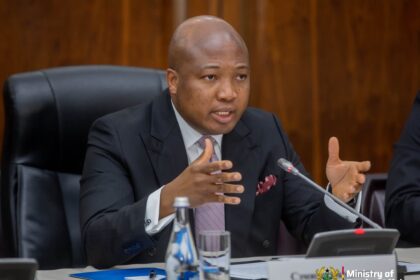





Security analyst Adib Saani has challenged the Narcotics Control Commission (NACOC) to provide a detailed explanation of how a Syrian national allegedly travelled from Ghana to Lebanon with 46.7 kilogrammes of cocaine, questioning the circumstances surrounding the shipment and the Commission’s account of the operation.
The seizure at Beirut’s Rafic Hariri International Airport on Saturday, October 31, 2026, has raised concerns about Ghana’s border security and its possible links to international drug trafficking networks.
Lebanese authorities have described the interception as the largest drug seizure in the airport’s history.
NACOC, however, has said the arrest resulted from a coordinated controlled delivery operation involving drug enforcement agencies in Ghana and Lebanon.
In a statement issued on Sunday, November 1, the Commission explained that the operation was intended to identify and apprehend individuals at different points along the drug supply chain while gathering intelligence to dismantle the wider criminal network.
It added that efforts were underway to identify and arrest suspected accomplices in Ghana.
But Saani, who writes for the Jatikay Centre, has questioned the explanation, describing it as unsatisfactory and suggesting that NACOC may be engaging in damage control.
In a Facebook post titled “Beirut Cocaine Seizure: NACOC’s Damage Control Raises More Questions Than Answers”, he asked why the suspect was allowed to leave Accra International Airport with such a large quantity of suspected narcotics if Ghanaian authorities already knew about the shipment.
“If NACOC knew about the cocaine shipment, why was the suspect allowed to depart Accra International Airport with such a substantial quantity of narcotics?” he questioned.
The security analyst is demanding clarity on when the drugs were detected, what safeguards were put in place and what evidence supports NACOC’s claim that Ghanaian and Lebanese authorities worked together on a controlled delivery.
He also pointed to the initial communication from Lebanese authorities, which credited their Customs and General Security agencies without explicitly acknowledging Ghana’s involvement.
Saani wants NACOC to explain whether the operation was genuinely a controlled delivery and whether investigators had identified the intended recipient before the suspect was arrested in Beirut.
Another issue he raised concerns the difference between the quantities reported by the two countries. NACOC put the consignment at approximately 40 kilogrammes, while Lebanese Customs reported a seizure of 46.7 kilogrammes.
He believes the Commission must account for the discrepancy and provide information on whether anyone suspected of facilitating the shipment through Ghana has been arrested.
According to the Lebanese General Directorate of Customs, the cocaine was concealed in 40 packages using sophisticated packaging and insulation materials intended to evade airport scanning equipment. Electronic tracking devices were also reportedly discovered inside the packages.
Preliminary investigations by Lebanese authorities indicated that the suspect, identified only by the initials B.H., had entered Lebanon through the Masnaa border crossing several weeks earlier. He later travelled to Accra before returning to Lebanon with the consignment.
Investigators are reportedly working to establish who was expected to receive the drugs, identify those responsible for dispatching the shipment and trace other individuals connected to the suspected trafficking operation.
For Saani, the incident raises questions beyond the arrest of one suspected courier. He warned that repeated cases of narcotics shipments allegedly leaving Ghana could damage the country’s international reputation and weaken public confidence in its security institutions.
He cautioned that Ghana could become an attractive transit point for international drug trafficking syndicates if weaknesses in its enforcement systems were not addressed.
“Controlled deliveries are legitimate law enforcement techniques. However, invoking the term should not become a convenient excuse for operational failures,” he stated.
Saani also criticised what he described as a tendency for security agencies to highlight international cooperation without providing the public with convincing answers about the circumstances surrounding major drug interceptions.
“We cannot continue tolerating a situation where foreign security agencies intercept massive drug shipments departing Ghana while our institutions issue statements celebrating cooperation without providing convincing answers,” he said.
He is calling for a thorough investigation into the shipment, accountability from the relevant institutions and action against anyone found to have facilitated the suspected trafficking operation.
“HEADS MUST ROLL,” he declared, insisting that Ghana’s security agencies must demonstrate competence and produce tangible results rather than rely on public statements to reassure the public.
“Ghana must not become a safe departure point for international drug traffickers,” he added.