



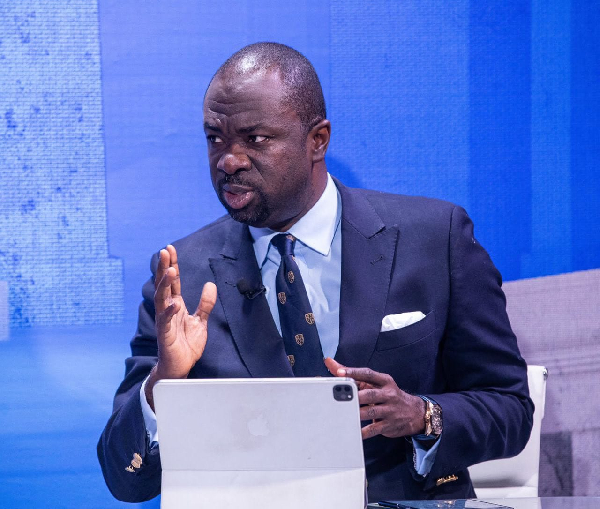
Lawyer and businessman Nana Agyei Baffour Awuah has rejected allegations that he personally benefited from millions of Ghana cedis in a settlement involving a disputed property linked to SIC Life Savings and Loans.
Awuah says the claims, including an allegation that he “made away with GH¢6 million”, do not reflect the documented events surrounding the case and has turned to the courts to have the matter determined based on evidence.
Speaking on the Citizen Show/Eda Mu Fua programme on Accra FM, he said his decision to sue was driven by the need to protect his reputation rather than to prevent his accuser from speaking publicly.
“When someone peddles falsehoods, the proper legal forum to test and prove the truth is a court of law,” he said.
Awuah explained that if his intention had been to silence his accuser, he could have sought an injunction to prevent further public comments.
Instead, he said, he wants the disputed claims tested through the appropriate legal process.
“My reputation is important to me,” he stated.
The lawyer described a person’s reputation as one of the most valuable legacies they can leave behind, stressing that wealth and property can be acquired and lost, but a good name remains significant to a person’s family.
“In this world, a person’s good name is paramount. You can acquire wealth or properties, but a good reputation is the legacy you leave on this earth for your children,” he said.
Awuah specifically denied claims reportedly made on TV3 that he had negotiated a GH¢5 million settlement in the land dispute and personally pocketed GH¢2.2 million from the amount.
He also rejected a separate allegation that he had taken GH¢6 million in connection with the disputed property.
Explaining his role in the matter, Awuah said a lawyer representing a client does not have the authority to independently decide whether a settlement offer should be accepted.
“When a settlement proposal is tabled, counsel takes the offer to the client. The client decides whether to accept or reject it,” he explained.
According to him, this was what happened in the dispute involving SIC Life Savings and Loans.
Awuah said the matter began with litigation involving a Notice of Claim before developing into an interpleader action over ownership of property that had been attached during execution.
He said he secured judgment for SIC and subsequently spent about two years pursuing enforcement of the judgment.
The situation, however, became more complicated after a third-party interest emerged in the property involving developers, Ecoswiss.
Awuah said Ecoswiss became involved because the continuing dispute over the land posed a threat to its development interests. He said the company subsequently proposed a settlement after it had already made payments to Equity Savings and Loans.
SIC Life eventually accepted the settlement as a business decision, according to Awuah, who said the company had to consider the risks associated with continuing the litigation.
He explained that if the case had gone to its conclusion and the court had determined that Ecoswiss were bona fide purchasers for value without notice, SIC could have risked losing its security despite the years spent pursuing the matter.
Awuah further insisted that the settlement was properly documented and received the necessary approval from SIC Life.
He said he communicated directly with the Managing Director of SIC Life Savings and Loans through written email correspondence during the process.
According to him, after the settlement terms had been finalised, the Managing Director confirmed that she had obtained board approval before signing the Terms of Settlement.
Awuah said his role at that stage was to witness the execution of the agreement and that he remains in possession of copies of the signed settlement documents.
He also challenged the suggestion that SIC was owed GH¢6 million but simply accepted GH¢5 million as a settlement.
According to Awuah, SIC had already recovered GH¢1.4 million from Equity Savings and Loans before the GH¢5 million settlement was reached.
He said GH¢400,000 was recovered after the company’s bank account was attached, while another GH¢1 million was obtained through an application for the oral examination of the company’s directors under oath.
He therefore argued that any account of the dispute that leaves out the earlier GH¢1.4 million recovery does not present the full picture of the transaction.
On the allegation involving the GH¢2.2 million legal fee, Awuah said the amount arose from an agreed legal retainer and the terms under which the settlement was concluded.
He said SIC’s agreed retainer was 15%, but maintained that the legal fees were not to be deducted from the settlement amount recovered by SIC.
Instead, he said, the settling party undertook to pay the agreed legal fees separately.
Awuah maintained that the circumstances surrounding the transaction are supported by legal and settlement documents that can be independently examined.
He said he would leave the disputed claims to the court to determine on the basis of the available evidence rather than engage in what he described as a media war.