




The government has reaffirmed its commitment to adding nuclear power to Ghana’s energy mix, saying the country is ready to move beyond planning and begin advancing the infrastructure and expertise needed for a nuclear energy programme.
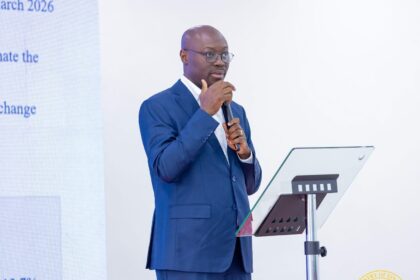
Lands and Natural Resources Minister Emmanuel Armah-Kofi Buah, who represented President John Dramani Mahama at the opening of the third US-Africa Nuclear Energy Summit in Accra, said Ghana had reached an important stage in its preparations.
“Ghana has moved beyond aspiration and is prepared to pursue nuclear power,” he said.
He explained that Ghana is currently in Phase Two of the International Atomic Energy Agency’s milestone approach for developing nuclear power infrastructure, with several preparatory activities already well advanced.
These include site studies, institutional strengthening, stakeholder engagement and discussions with technology providers.
Buah stressed, however, that Ghana’s nuclear ambitions must extend beyond the construction of a power plant to include the development of a skilled workforce capable of managing the programme over the long term.
“Human capacity in itself is infrastructure. We, therefore, cannot build physical infrastructure today and hope to find the people tomorrow. We must build both,” he said.
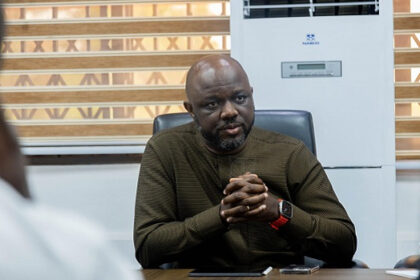
Energy and Green Transition Minister Dr John Jinapor described nuclear power as a key part of Ghana’s strategy for meeting rising electricity demand while supporting industrial development.
He noted that peak electricity demand had increased from around 300 megawatts when the Akosombo Dam was commissioned to about 4,500 megawatts today.
With much of the country’s installed generation capacity now coming from thermal sources, Jinapor said Ghana needed a more diversified generation mix involving natural gas, renewable energy and nuclear power.
“Nuclear energy forms a critical pillar of this strategy,” he said.
According to Jinapor, Ghana is continuing to follow the IAEA milestone process with the aim of incorporating nuclear generation into the national electricity system.
He also disclosed that Ghana and the United States had made progress towards concluding a 123 Agreement on peaceful nuclear cooperation. The agreement has already been initialled and is awaiting the necessary approvals.
The United States has also pledged technical support for Ghana’s nuclear ambitions.
Dr Michael Goff, Principal Deputy Assistant Secretary at the US Department of Energy’s Office of Nuclear Energy, said Washington was committed to helping Ghana and other African countries build sustainable nuclear energy programmes.
He said the US had partnered Nuclear Power Ghana to establish a Regional Energy Training Centre in Accra, where specialists receive training and participate in technical exchanges covering areas including reactor technology, cybersecurity, quality assurance and spent fuel management.
“Our objective is not to provide individual training programmes. It is to build lasting institutional partnerships and technical capacity that can grow alongside Africa’s nuclear ambitions,” Goff said.
Dr Humphrey Ayim-Darke, immediate past President of the Association of Ghana Industries, called for the nuclear programme to be treated as a strategic national undertaking capable of supporting Ghana’s long-term industrial transformation.
He said its success would require predictable investment, strong institutions and sustained cooperation among government, industry, development partners, investors and technical institutions.
Trades Union Congress General Secretary Joshua Ansah also expressed support for the programme, stressing that its success would depend not only on technology and financing but also on skilled workers, strong institutions and sustained public confidence.
He said a successful nuclear programme could strengthen Ghana’s energy security, support industrialisation, create jobs and contribute to long-term economic growth.
The three-day US-Africa Nuclear Energy Summit is being held in Accra from August 19 to 21 under the theme, “Building and Sustaining Africa’s Nuclear Workforce.”