



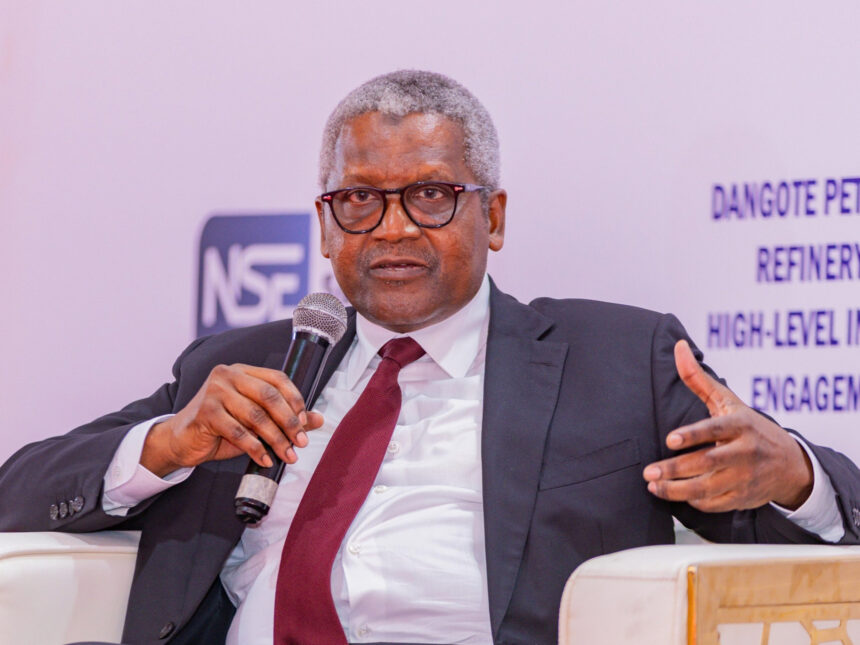
Africa must change the way it uses its natural resources if the continent is to create more jobs and reduce its dependence on imported products, Nigerian industrialist Aliko Dangote has said.
Dangote, Africa’s richest man, said African countries continue to lose economic opportunities by exporting raw materials for processing elsewhere and then importing the finished products at higher costs.
Speaking in an interview with the BBC, he said his business group plans to invest heavily in industries capable of processing Africa’s mineral resources on the continent.
“Our target is to disrupt actually taking Africa’s mineral resources to go and create jobs elsewhere and import poverty into our continent,” he said.
According to Dangote, Africa already has the natural resources and human capacity needed to drive industrial development, but major investments in infrastructure are required to unlock that potential.
He identified reliable electricity as one of the most important requirements for expanding manufacturing and mineral processing across the continent.
Dangote disclosed that his group is targeting at least 10,000 megawatts of power generation capacity across Africa by 2030.
He said the planned investment could potentially increase to 20,000 megawatts if there is sufficient demand and governments are willing to enter into the necessary agreements.
For Dangote, the availability of power is closely linked to Africa’s ability to transform its natural resources into finished products and create employment opportunities locally.
He pointed to Zambia’s copper industry as an example, arguing that more of the country’s mineral resources should be processed locally rather than being exported in raw form.
He said inadequate electricity supply remains one of the major obstacles preventing African countries from expanding local processing and manufacturing.
Dangote also highlighted planned investments in Lamu, Kenya, where he said his group intends to develop power generation capacity alongside its refinery project.
The businessman acknowledged opposition to the project, including protests and land-related concerns, but said such challenges would not prevent the planned investment from moving forward.
He suggested that some of the resistance could also be linked to competition, arguing that local businesses and international traders may be concerned about the impact of the project on their interests.
“Nobody wants Africa to develop. That’s why we Africans will develop Africa, whether they like it or they don’t like it. We are moving,” Dangote said.
His comments reflect his broader push for African countries to retain more value from their natural resources by increasing local processing, expanding industrial capacity and investing in infrastructure that can support manufacturing.
For Dangote, the goal is not simply to extract Africa’s resources, but to build industries around them that can generate jobs and economic opportunities within the continent.
Watch the video below: