



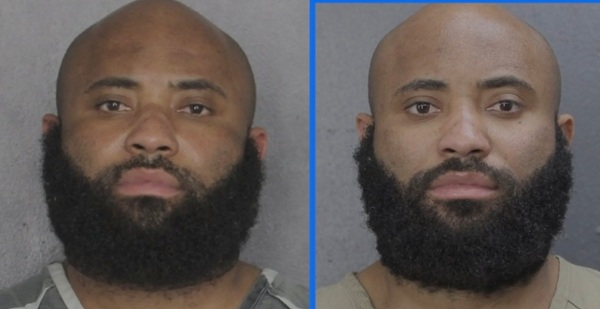
A Ghanaian-American citizen, Kelvin Owusu Nkwantabisa, has been sentenced to 17 years in prison in the United States for his role in a transnational fraud and money laundering scheme that defrauded businesses and individuals of more than $38 million.
Nkwantabisa, 33, who also used the aliases “Kevin Brown” and “KO,” was among four individuals sentenced by a federal court after being convicted in connection with a sophisticated Business Email Compromise (BEC) operation.
According to US prosecutors, the criminal network gained unauthorized access to victims’ email accounts and secretly monitored legitimate business communications. The group then impersonated trusted business partners and redirected payments into bank accounts controlled by the fraudsters.
Investigators said the stolen funds were moved through multiple bank accounts and shell companies to conceal their origin and evade detection by law enforcement authorities.
US Attorney Jason A. Reding Quiñones described the operation as a large-scale international fraud scheme that exploited trust and legitimate business relationships for financial gain.
Court documents identified Nkwantabisa as the leader of the US-based arm of the network. Prosecutors said he coordinated activities with overseas accomplices, directed the creation of bank accounts across several states, monitored fraudulent transfers, and instructed co-conspirators on laundering the proceeds.
Authorities said his actions contributed to losses exceeding $38 million, leading to the 17-year prison sentence imposed by the court.
Three other members of the network also received prison terms.
Leshea Moore, 29, of Georgia, was sentenced to more than 11 years in prison after admitting to establishing shell companies, opening fraudulent bank accounts, and helping launder stolen funds.
Justice Amoh, 37, of New York, who used the alias “Samuel Andrews,” received a three-year prison sentence for opening bank accounts under false identities and processing fraudulent transactions.
John Jouissance, 33, of Ohio, was sentenced to four years in prison after pleading guilty to creating shell companies and bank accounts used to move illicit proceeds.
“This was organized international fraud carried out through deception, stolen trust, and financial manipulation,” US Attorney Quiñones said. “These defendants infiltrated legitimate business communications, diverted millions of dollars, and laundered the proceeds through shell companies and fraudulent bank accounts to conceal their crimes.”
The investigation was conducted by Homeland Security Investigations (HSI) in Fort Lauderdale, while prosecutors from the US Attorney’s Office for the Southern District of Florida handled the case.
The sentencing is part of ongoing efforts by US authorities to combat cyber-enabled financial crimes, particularly Business Email Compromise schemes, which continue to cause billions of dollars in losses worldwide.