



Refugees and asylum seekers in South Africa are living with renewed fears of violence as a September 30 deadline issued by the anti-immigration group March and March approaches.
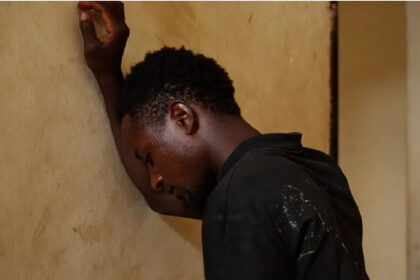
For Bishop Raphael Bahebwa, the anxiety has become deeply personal. The Congolese refugee, who has lived in South Africa for 26 years, says he is currently in hiding after receiving threats over his advocacy for the rights of foreigners.
“I am in hiding now because they say they are going to kill me for speaking about the rights of foreigners,” he told Al Jazeera.
Bahebwa said he has witnessed repeated waves of anti-foreigner sentiment during his more than two decades in South Africa, but believes the current situation feels different.
March and March, which has organised protests across the country this year, has called on undocumented foreign nationals to leave South Africa. The group has also warned of further demonstrations if its demands are not met.
For refugees in Durban, however, the distinction between documented and undocumented migrants provides little reassurance. They say hostility on the streets often begins before anyone asks about their immigration status.
Fears of renewed violence
South Africa is scheduled to hold local government elections on November 4, with migration emerging as an increasingly prominent issue in the political and social debate.
For months, Bahebwa was among hundreds of refugees and asylum seekers who lived on the pavement outside the Durban Refugee Reception Centre on Che Guevara Road.
Many came from the Democratic Republic of the Congo and Burundi, while others were from Uganda, Mozambique and Tanzania. They said they had fled their communities because they feared attacks linked to their nationality.
They sought safety outside the Department of Home Affairs office, but the pavement eventually became their temporary home.
For about four months, men, women and children slept outdoors, exposed to the weather and dependent on civil society groups and volunteers for food and other basic necessities.
“It has been very tough,” Bahebwa said. “Never before have I experienced something like this.”
Some refugees told Al Jazeera that conditions at the makeshift camp became increasingly difficult, with irregular access to food and medication. They also said a man with tuberculosis died while living at the camp, although Al Jazeera said it had not independently established the circumstances surrounding his death.
The camp itself was not completely removed from the hostility that residents said they had fled.
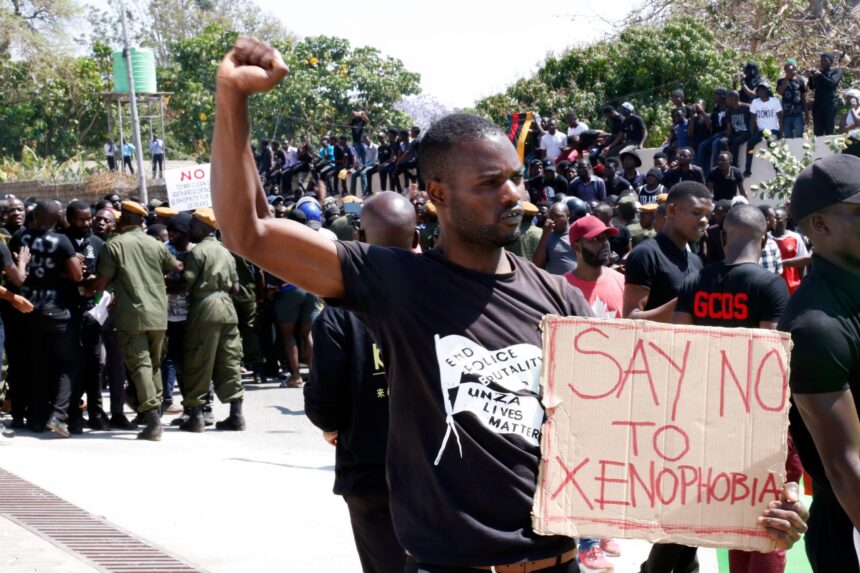
On September 3, members of March and March confronted refugees and asylum seekers outside the centre, triggering violence that required police intervention. At least four people were reported injured.
Days later, police formed a barrier between protesters and refugees during another demonstration as tensions rose.
March and March describes its campaign as being focused on undocumented immigration, crime and deteriorating conditions in South African communities. Its leaders have rejected accusations that the movement is xenophobic, saying its target is undocumented migration rather than foreigners generally.
Bahebwa, however, said documented and undocumented migrants have both been affected by the hostility.
Earlier this year, six refugees working in salons around Durban’s Warwick Street Market were reportedly beaten by men carrying sticks, according to public-interest outlet GroundUp. Two of them were hospitalised.
Bahebwa also alleged that some migrants struggled to get police assistance after earlier attacks.
“Police said we can’t open cases because we are foreigners. We had nowhere to go,” he alleged. Police have not publicly responded to that specific claim.
Nowhere obvious to return to
In mid-September, the government moved to clear the makeshift camp outside the refugee reception centre.
The refugees were given two options: return to the communities they had left or accept temporary accommodation at the Lindela facility in Gauteng, hundreds of kilometres from Durban.
Lindela is a government-run immigration detention facility used for people facing deportation.
The decision divided the refugees. Some were reluctant to move to a facility associated with immigration detention and repatriation, while others felt they could no longer cope with life on the pavement.
On September 15, 274 people were transported by bus from Durban to Lindela. About 150 others remained in Durban and began looking for alternative accommodation.
But leaving the pavement did not necessarily remove the fears that had brought them there.
Kafuti Muyumba, a small business owner from the DRC and a representative of the refugee community, said many refugees were afraid to return to neighbourhoods where they had established businesses and built their lives.
“People are afraid,” he said. “Even the police allow March and March violence. They came with sticks and say we are attacking them.”
Muyumba said many refugees had lost their livelihoods during months of uncertainty and were now struggling to find somewhere to live.
“This is not the first time we are experiencing xenophobia,” he said. “In 2008 and then in 2015 we also experienced this.”
Xenophobic violence in 2008 killed dozens of people and displaced thousands, while further outbreaks targeting foreign nationals occurred in subsequent years.
Those memories make the September 30 deadline particularly unsettling for refugees like Muyumba.
“We don’t trust the police. They are not being fair with us. Some of them are also saying we must go,” he said.
Police have said they do not plan to alter their normal policing approach because of the deadline and that protesters will be expected to remain within the law.
March and March maintains that its demand is for undocumented immigrants to leave South Africa and return to their countries.
For many Congolese refugees, however, returning home is not viewed as a realistic option.
“There is still war there,” Muyumba said.
South Africa tightens immigration enforcement
Amid the protests and growing tensions, the South African government says it has intensified immigration enforcement.
Between June 14 and August 20, authorities processed 86,596 foreign nationals for deportation and repatriation, according to the government’s Inter-Ministerial Committee on Migration.
Malawians accounted for the largest group, followed by Zimbabweans and Mozambicans.
Government data indicates that 90 percent of those repatriated had entered South Africa illegally, while 95 percent were classified as having crossed the border outside official ports of entry.
Authorities say the operations form part of wider efforts to strengthen border management and enforce immigration laws.
At the same time, government officials have warned private groups against attempting to enforce immigration laws themselves.
The September 30 deadline issued by March and March has no legal authority. The government has stressed that private citizens cannot deport people from South Africa.
But for refugees who have already spent months living outside a government office, the absence of legal authority has done little to ease their fears.
Some have been moved hundreds of kilometres away, while others are trying to find new accommodation in communities they once fled.
Among the migrants interviewed by Al Jazeera, there is a common concern that immigration documents may offer limited protection when hostility is directed at people simply because they are foreigners.
Bahebwa has lived in South Africa for more than a quarter of a century. For now, he remains in hiding, uncertain about what the September 30 deadline will bring.
“They are scapegoating us as foreigners,” he said. “It is not going to end on September 30. It has to do with the elections.”