




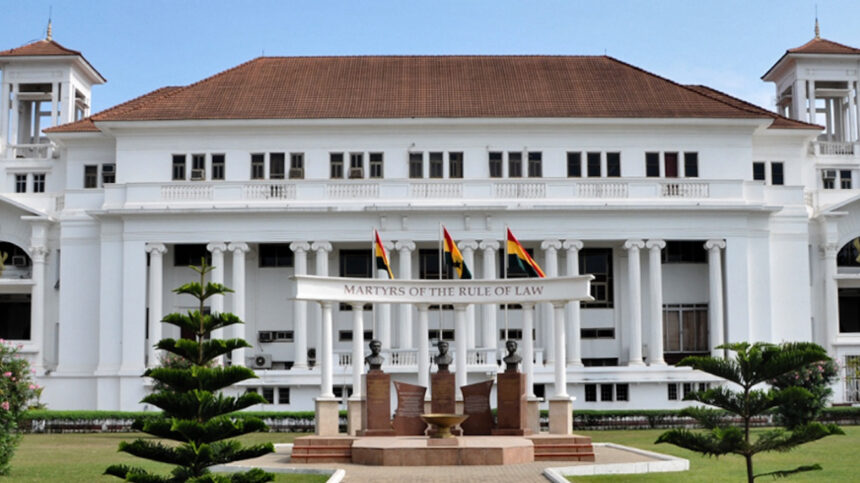
The Supreme Court has declared the delegate system used by political parties to elect their presidential and parliamentary candidates unconstitutional, ordering parties to adopt a more inclusive voting process within one year.
In a split 5-2 decision, the apex court ruled that all political parties must create mechanisms that allow every member in good standing to participate in the election of presidential and parliamentary candidates.
The court directed political parties to comply with the ruling within one year from the date of the judgment.
The decision effectively ends the long-standing delegate system, under which only selected party delegates were permitted to vote in presidential and parliamentary primaries on behalf of the wider membership.
The landmark ruling is expected to compel political parties to amend their constitutions and internal electoral rules to align with the Supreme Court’s interpretation of the 1992 Constitution.
It also marks a significant shift in Ghana’s internal party democracy by expanding voting rights to all eligible members in good standing during the selection of parliamentary and presidential candidates.
Political parties will now be required to design new electoral frameworks that ensure broader participation in their internal elections ahead of future national polls.
The ruling is expected to have far-reaching implications for Ghana’s two main political parties, the National Democratic Congress (NDC) and the New Patriotic Party (NPP), both of which have traditionally relied on delegate conferences to elect flagbearers and select parliamentary candidates.
The judgment is widely seen as one of the most significant decisions on internal party democracy in recent years and is expected to reshape how political parties conduct their primaries going forward.