



The Ghana National Fire Service (GNFS) has disclosed that delayed reporting, limited access routes, gas explosions, and illegal electrical connections significantly hindered efforts to quickly control the fire outbreak behind the VVIP Station at Kwame Nkrumah Circle in Accra.
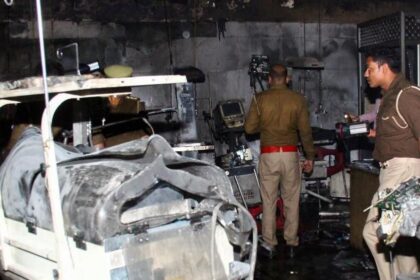
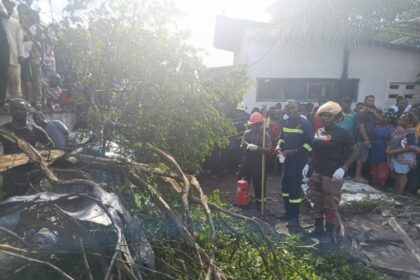
The fire, which broke out around 10:00 a.m. on Tuesday, January 20, 2026, destroyed more than 50 mobile phone shops, according to eyewitnesses and officials. Although firefighters responded promptly after receiving the alert and eventually brought the blaze under control, several operational challenges complicated the response.
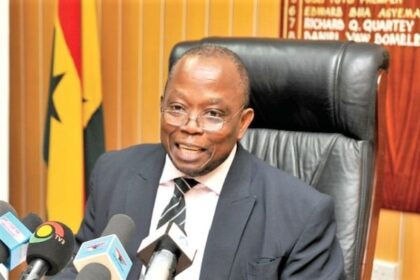
The Head of Public Affairs of the GNFS, DOII Desmond Ackah, said poor accessibility to the affected area was a major obstacle.

He explained that firefighters were forced to lay long hose lines to reach the seat of the fire, a situation that required higher water pressure and led to significant water loss, slowing containment efforts.
“We had a difficult time even gaining access to where the fire was actually raging. In professional firefighting, when you don’t have direct access, you have to lay more hoses to reach the source of the fire,” he said.
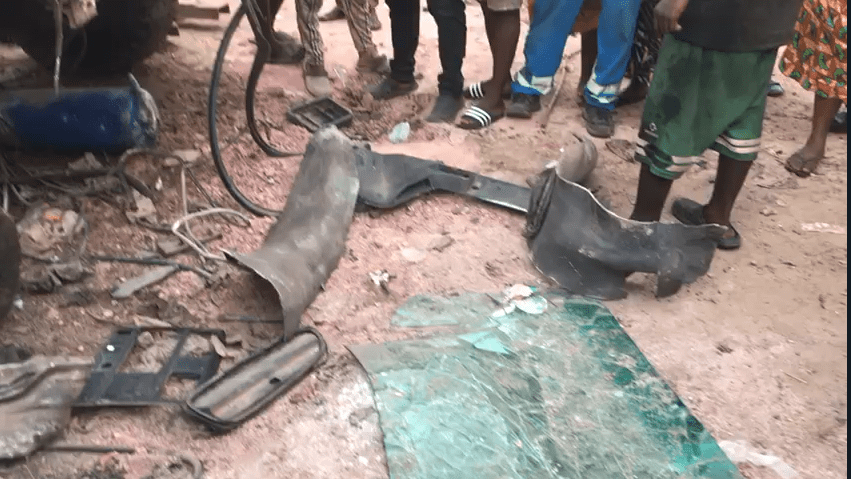
DOII Ackah noted that the presence of numerous gas cylinders and stoves inside the shops worsened the situation, as intermittent explosions intensified the blaze.
“There were too many gas cylinders and stoves in that space. At different points, as the fire raged, there were explosions which escalated the situation. When explosions occur, combustible gases are thrown far, igniting unburnt gases and spreading the fire. This makes containment within a confined space extremely difficult,” he explained.
He also identified illegal and haphazard electrical connections as a serious threat to both firefighters and the operation.
“When we arrived, we noticed chaotic wiring. In some cases, about 10 shops were connected to a single meter, with wires poorly installed. The focus was just on getting electricity, without regard for safety or proper cabling,” he said.
According to him, the unsafe wiring initially exposed firefighters to electrocution risks, forcing the team to isolate power in the area. However, this proved challenging due to multiple power sources.
“Even when power is isolated from one transformer, you can’t be certain because electricity could be coming from another source. It was a very dicey situation,” he noted.
DOII Ackah added that the most critical challenge was the delayed alert to the Fire Service, which allowed the fire to escalate before responders arrived, making containment far more difficult.