




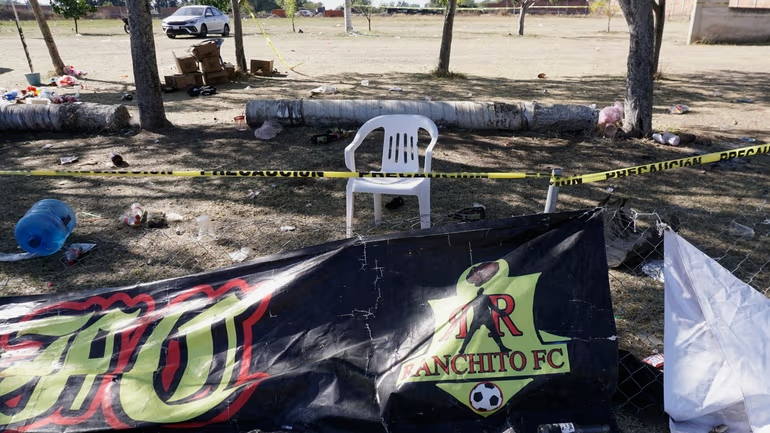
At least 11 people have been killed and around a dozen others injured after gunmen opened fire on a group of people gathered at a football pitch in central Mexico.
The attack took place on Sunday at the Cabañas pitch in the Loma de Flores neighbourhood of Salamanca, in the state of Guanajuato. Witnesses said armed men arrived at the scene in several vehicles and began shooting indiscriminately at those present.
Many of the victims were families who had remained at the pitch to socialise after a match between local teams. Among those killed were at least one woman and one child. Neighbours reported hearing as many as 100 gunshots during the assault.

The motive for the attack remains unclear. Local and federal security forces have been deployed and investigations are under way.
The shooting followed a series of violent incidents in Salamanca a day earlier, in which five men were killed and another abducted.
Guanajuato recorded the highest number of murders in Mexico last year and has experienced a sharp rise in gang-related violence. Criminal groups in the region are heavily involved in fuel theft, drug trafficking and extortion, frequently targeting oil pipelines and tanker trucks operated by the state-owned energy company Pemex.
Salamanca, home to one of Pemex’s major refineries, has been particularly affected by such violence. Analysts say much of the bloodshed is linked to rivalry between the Jalisco New Generation Cartel (CJNG) and the Cartel de Santa Rosa de Lima (CSRL).
The activities of both gangs extend beyond Mexico, with stolen fuel and illicit drugs being trafficked into the United States. Last year, the US State Department designated the CJNG as a Foreign Terrorist Organisation and later imposed sanctions on the CSRL.
US President Donald Trump has made tackling drug cartels a central priority of his administration and has previously accused them of “running Mexico”. He has also threatened military action against what he has described as “narco-terrorists”.
The US has already carried out dozens of strikes against vessels suspected of transporting drugs in the Caribbean and Pacific, resulting in more than 100 deaths. These actions have drawn criticism from legal experts, who question their legality.
In response to mounting pressure, Mexican President Claudia Sheinbaum last week handed over 37 “high-impact” suspects to US authorities. Local media described the move as an effort to strengthen cooperation with Washington and prevent potential unilateral US strikes on Mexican soil.