




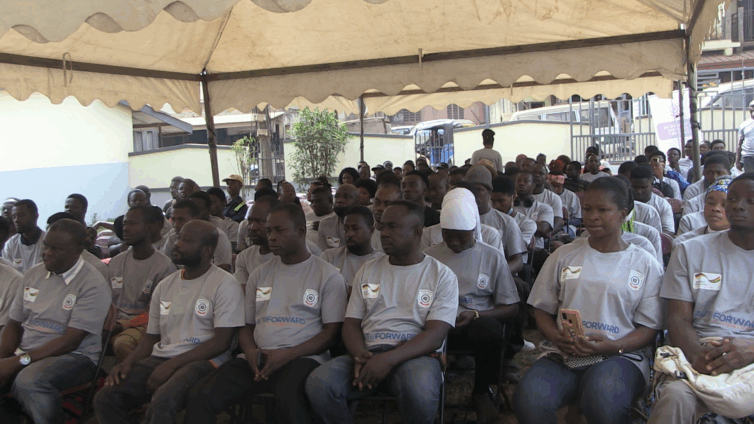
A three-month skills development programme supported by German Development Cooperation has successfully trained more than 160 mechanics in oil-waste management and the repair of two- and three-wheeler motorbikes in Kumasi.
The initiative was implemented in partnership with the Suame Magazine Industrial Development Organisation (SMIDO) and the Technical Cooperation Centre of the Kwame Nkrumah University of Science and Technology (KNUST).
It received support from the Special Initiative Decent Work for a Just Transition under the Invest for Jobs brand, funded by the German Federal Ministry for Economic Cooperation and Development and implemented by Deutsche Gesellschaft für Internationale Zusammenarbeit (GIZ) GmbH.

Motorbikes and tricycles are central to transportation, delivery services, and livelihoods across Ghana. Despite their importance, many mechanics in the sector operate without formal training, while unsafe workshop practices and improper disposal of used engine oil continue to pose serious risks to public health, the environment, and business sustainability.
The training programme was designed to tackle these challenges by enhancing technical competencies, promoting safe oil-waste management practices, and supporting the creation of decent and sustainable jobs. Participants included young technicians, informal mechanics, and small-scale business operators drawn from various clusters within the Suame Industrial enclave. Notably, women made up about 41 per cent of the trainees, highlighting the programme’s commitment to inclusivity.
During the training, participants acquired hands-on skills in diagnosing, servicing, and repairing two- and three-wheeler motorbikes.
They were also trained in modern oil-drainage techniques, workplace safety standards, and environmentally sound methods for handling and disposing of used engine oil. To support practical application, essential tools were provided to the trainees.
Speaking at the graduation ceremony, Simon Hochstein, Component Head at Invest for Jobs, underscored the broader impact of the initiative, noting that the programme contributes to job creation, improved workplace safety, and a more environmentally sustainable transport sector.