



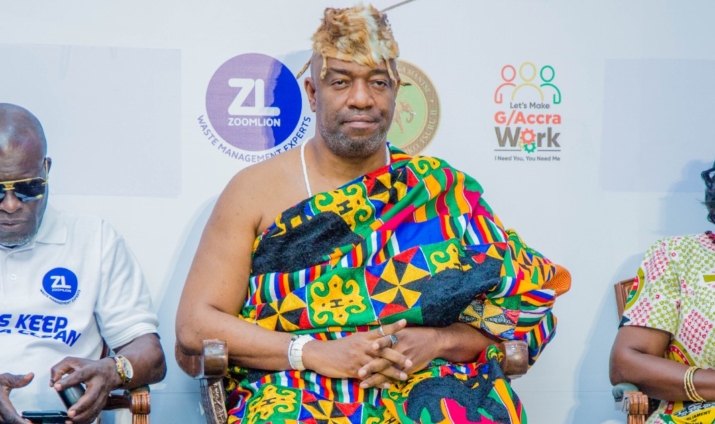
Ga Mantse, King Tackie Teiko Tsuru II, has unveiled plans for a strict legislative framework aimed at ending child labour in the fishing industry within the Ga State.
The traditional ruler announced that new customary by-laws are being developed to criminalise the involvement of children in commercial fishing activities during school hours. The proposed regulations will place legal responsibility on parents and guardians who allow or compel their children to work at the expense of their education.
The announcement was made at the 2026 Kinka Blonya, the annual New Year children’s festival held on Thursday, January 1, 2026. Speaking before a large audience of children, parents, and traditional leaders, the Ga Mantse declared that the long-standing practice of prioritising fishing over formal education would no longer be tolerated.

Once the by-laws are approved, parents found violating them could face arrest and prosecution.
“All the traditional authorities in the Ga State have agreed to actively promote education. The time is fast approaching when engaging children in fishing at the expense of schooling will be treated as a criminal offence,” the Ga Mantse stated.
To address economic challenges that often drive child labour, he disclosed that the Office of the Ga Mantse is investing heavily in education-focused interventions, including a large-scale scholarship programme targeting vulnerable families in coastal communities.
According to the King, with these support systems in place, the presence of school-aged children at landing beaches during school hours will no longer be acceptable.
“Education in the Ga State is now non-negotiable. We are offering over 1,000 scholarships, so parents have no excuse not to enrol their children in school. Together, let us raise Ga children for the future,” he added.
The initiative, he explained, goes beyond legal enforcement and represents a broader socio-economic strategy to build human capital within the Ga community. Through the scholarship scheme, traditional leaders aim to nurture future professionals such as doctors, engineers, and entrepreneurs.
The Ga Mantse emphasized that securing the future of the state requires a collective change in mindset, where long-term educational benefits take precedence over short-term economic gains from daily fishing activities.
To ensure effective implementation, the Ga Traditional Council is expected to work closely with the Ghana Police Service and local government authorities.
Key elements of the enforcement plan include regular patrols at landing beaches to identify out-of-school children, legal action against parents and guardians who violate the by-laws, and monitoring scholarship beneficiaries to ensure consistent school attendance and academic performance.