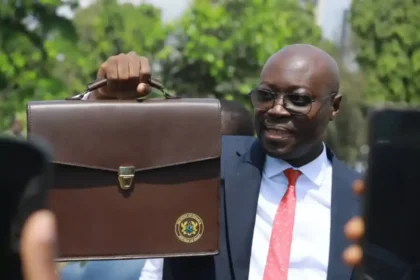





Former Finance Minister Dr Mohammed Amin Adam has challenged Finance Minister Dr Cassiel Ato Forson to explain the outcome of the government’s 24-Hour Economy programme before presenting another major economic initiative in the 2027 Budget.
In an open letter released on November 11, 2026, the former minister questioned the government’s proposed US$10 billion New Economy programme, arguing that Ghanaians deserve clear evidence of what previous economic promises have achieved.
He also criticised what he described as the government’s emphasis on macroeconomic indicators while ordinary households continue to face pressure from unemployment and the cost of living.
Dr Amin Adam cited a KPMG pre-budget survey which found that 71 per cent of respondents identified jobs and youth employment as their biggest national priority, while 54 per cent pointed to the cost of living.
He argued that the findings reflected the concerns of young people struggling to find work and households dealing with rising living costs.
“Indeed, the pocket economy is hurting whilst the paper economy is being celebrated,” he wrote.
The former minister questioned what had become of the government’s earlier 24-Hour Economy programme, which he said was introduced with ambitious investment and employment targets.
According to him, the government has yet to provide a sufficiently convincing and independently verifiable account of the jobs created, investments mobilised and businesses transformed under the initiative.
He therefore challenged the Finance Minister to explain what makes the proposed New Economy programme different from the previous policy.
“What exactly is new, beyond the branding?” he asked.
Dr Amin Adam also raised concerns about the proposed US$10 billion investment programme, estimated to require about US$2.5 billion annually over four years.
He questioned the source of the funding and how much of the proposed investment would represent genuinely new financing.
A major concern in his letter was the reported plan to reduce the primary surplus target from 1.5 per cent to 0.5 per cent of GDP to create room for the programme, alongside additional revenue mobilisation.
He argued that lowering the fiscal target would not automatically generate new wealth and could come at the expense of faster debt reduction.
“Why should the country weaken an important fiscal anchor so soon after a painful debt restructuring?” he asked.
He further warned that any additional fiscal space created through changes to the target must be directed towards productive investments rather than recurrent expenditure or politically attractive projects.
The former Finance Minister also called for a clear financing plan, implementation milestones and measurable employment targets before the government proceeds with the initiative.
Beyond the proposed programme, Dr Amin Adam examined recent developments in the economy, acknowledging progress in some areas while warning that gains remained vulnerable.
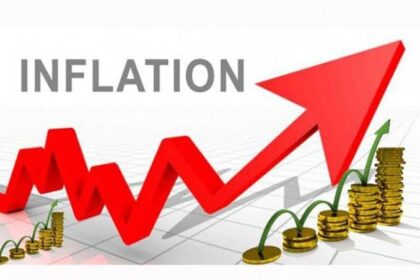
He noted that inflation had declined from a peak of 54.1 per cent in December 2022 to 23.8 per cent by December 2024, before falling further to 3.2 per cent in March 2026.
However, he pointed to an increase in headline inflation to 5.5 per cent by October 2026, arguing that the development required caution.
He also cited an estimated 9.5 per cent depreciation of the cedi against the US dollar by September 2026, following its appreciation in 2025.
On economic growth, he referred to Bank of Ghana figures showing that real GDP growth slowed from 6.6 per cent in the second quarter of 2025 to 6.0 per cent in the corresponding quarter of 2026.
Non-oil GDP growth also declined from 8.5 per cent to 5.4 per cent over the same period, while agricultural growth fell from 7.1 per cent to 3.9 per cent.
Dr Amin Adam, however, acknowledged the importance of policy continuity, noting that the current administration had maintained aspects of economic stabilisation and reforms initiated under the previous NPP government, including the Gold Purchase Programme and the debt restructuring process.
He also highlighted the contribution of the information and communications technology sector to economic growth, arguing that the current administration should recognise the foundations laid by previous governments in the digitalisation agenda.
He maintained that Ghana’s economic transformation would require more than new slogans and ambitious investment announcements, stressing the need for fiscal discipline, competitive businesses, affordable credit, reliable infrastructure and productive investment.
“The central issue is not the size of the announcement but the credibility of the financing, the quality of the investment and the economic returns it will generate,” he stated.
As Ato Forson prepares to present the 2027 Budget, the former minister said the government would be judged by its ability to explain how the New Economy programme would be funded, how it differed from earlier promises and what it would deliver for ordinary Ghanaians.
He ended his letter with a direct challenge to the Finance Minister: “Before unveiling a New Economy, account for the 24-Hour Economy.”
He added that Ghana needed a functioning economy rather than another freshly packaged promise.