



Ghana’s planned Accra-Kumasi Expressway is set to introduce a new standard for long-distance road travel, with the project designed as the country’s first six-lane, access-controlled tolled expressway.
The 198.7-kilometre corridor will connect Ablekuma in the Greater Accra Region to Sewua in the Ashanti Region, linking Ghana’s two major economic hubs with a modern highway designed to improve traffic flow and reduce travel times.
Preparatory work has already advanced, with the Ghana Armed Forces clearing 183.6 kilometres of the right of way in 19 weeks, exceeding its initial target of 175.6 kilometres.
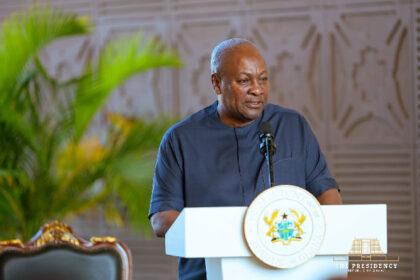
President John Dramani Mahama has announced that the 48 Engineer Regiment of the Ghana Armed Forces will serve as the major subcontractor for the project.
Finance Minister Dr Cassiel Ato Forson has also assured that the funds required for the construction will be fully available by December 2026, stressing that the government will not borrow to finance the project.
The main project will consist of about 176 kilometres of new dual carriageway, alongside 23 kilometres of upgraded connector roads at the Accra and Kumasi terminals.
Here are some of the key features of the expressway:
- Three-lane dual carriageway
The main highway will be a Class A, three-lane dual carriageway built on a 36-metre standard roadbed.
It will have a design speed of up to 120 km/h, while the connector roads will be Class B routes with a maximum speed limit of 60 km/h.
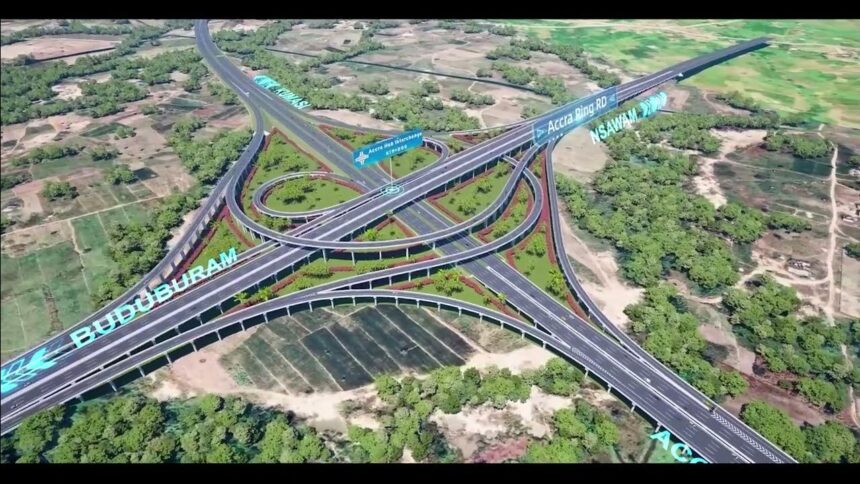
- Eight grade-separated interchanges
Eight grade-separated interchanges will be constructed along the corridor.
These will allow vehicles to enter and exit the expressway without interfering with high-speed traffic travelling along the main carriageway.
- 11 vehicle overpasses
The project will include 11 vehicle overpasses designed to allow traffic to cross the expressway while reducing potential conflicts with vehicles travelling at higher speeds.
- 55 mainline bridges
A total of 55 mainline bridges will form part of the expressway infrastructure.
These bridges will support the road corridor across areas where crossings and other engineering structures are required.
- Nine at-grade intersections and about 200 culverts
The expressway will also feature nine at-grade intersections and approximately 200 reinforced concrete box culverts.
The culverts will play an important role in drainage and water management along the route.
- Four service areas
Motorists will have access to four fully equipped service areas along the expressway.
The facilities are expected to provide spaces for food, rest and vehicle-related services for people travelling between Accra and Kumasi.
- Eight tolling locations
Eight tolling locations will be strategically positioned along the expressway as part of the project’s access-controlled and tolled design.
- Intelligent Transport System
The highway will be supported by an Intelligent Transport System (ITS) to monitor traffic and improve the management of the corridor.
The system will operate through one central operating centre and two monitoring centres equipped with electromechanical systems.
- Emergency response facilities
Dedicated fire service and ambulance stations will be established along the route.
The facilities are intended to allow emergency responders to reach motorists quickly in the event of road crashes and other incidents.
- Three maintenance depots
Three maintenance depots will be built along the corridor to support routine maintenance and the long-term upkeep of the expressway.
- Connections to communities
The expressway will pass through a number of towns and communities, including Adeiso, Asamankese, Akim Oda, Ofoase and Kwaso.
The Ghana Armed Forces has now completed and handed over the cleared right of way to the Ministry of Roads and Highways, marking an important step towards the construction phase.
According to Francis Ahlidza, Chief Executive Officer of Accra-Kumasi Expressway Limited, construction is expected to officially begin in January 2027.
Once completed, the expressway is expected to ease pressure on the existing N6 route and significantly reduce travel time between Accra and Kumasi.
With its wider carriageway, interchanges, bridges, service areas, tolling infrastructure and intelligent traffic management systems, the project is expected to become one of Ghana’s most significant road infrastructure developments.