



Members of the Senior Staff Association of the Kwame Nkrumah University of Science and Technology (KNUST) have joined a nationwide strike to press the government to address outstanding grievances relating to their conditions of service, pension arrears and related issues. The action, which began on Tuesday, February 3, 2026, forms part of a broader industrial action by the Senior Staff Association–Universities of Ghana (SSA‑UoG) affecting public universities across the country.
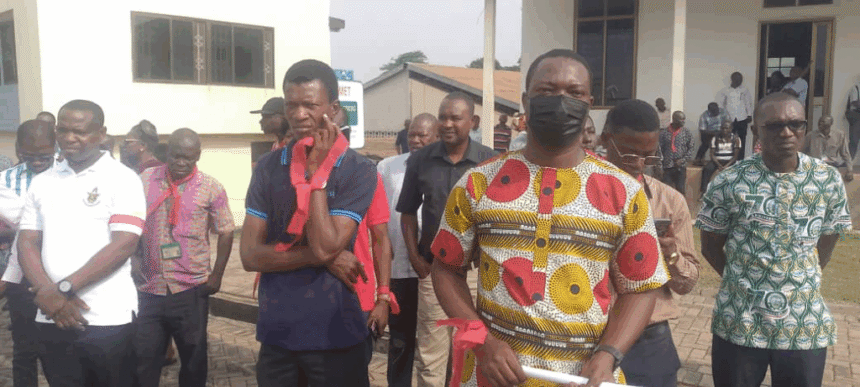
At a rally on the KNUST campus, senior staff, many dressed in red bands to signify their protest, urged colleagues to stay away from work until their demands are addressed.
Mr George Ansong, National Chairman of the University Senior Staff Association, outlined the primary grievances driving the indefinite strike:
- Unilateral changes to conditions of service: Ansong said the Fair Wages and Salaries Commission altered staff conditions of service without meaningful engagement or consultation with the association, undermining agreed terms.
- Outstanding Tier Two pension contributions: He noted that the government had failed to pay the Tier Two pension arrears for senior staff from August to December 2024, even though payments for 2025 had been made. The association is also insisting that statutory penalties for late payment be honoured.
- Unpaid salaries and allowances at UniMAC: Staff at the University of Media, Arts and Communication (UniMAC) — created from the merger of three institutions — have not received rightful salaries and allowances since the institution attained university status.
Ansong said repeated engagements, letters and meetings with government stakeholders have failed to resolve the issues, leaving the association with no choice but to sustain the strike.
The nationwide action underscores growing frustration among senior university staff over delays in pension payments, alterations to service conditions and unresolved salary disparities — concerns the association says threaten staff welfare and institutional stability.