



Africa’s vast mineral wealth—estimated to account for nearly a third of the world’s reserves critical to the global energy transition—has long been cited as a symbol of untapped potential. Increasingly, however, that narrative is shifting as countries move from rhetoric to strategy, placing greater emphasis on value creation, domestic participation, and long-term sustainability.
Across the continent, several major resource producers are rolling out new mining frameworks designed to anchor processing, manufacturing, and skills development closer to the source of extraction. The objective is clear: to ensure that mineral wealth translates into broader economic benefits, rather than remaining confined to raw exports.
Botswana and Ghana have emerged as leading examples of this evolving approach, adopting policies that balance investor confidence with stronger national participation, regulatory clarity, and economic diversification.
In Botswana, the need for reform has been sharpened by the country’s heavy reliance on diamonds, which still account for about 80% of export earnings, one-third of fiscal revenue, and roughly a quarter of GDP. While Botswana remains the world’s largest diamond producer by value, prolonged softness in the global diamond market has accelerated efforts to diversify.
Policy and investment attention has increasingly turned to critical minerals such as copper, nickel, lithium, manganese, uranium, and gold—resources essential to clean energy and emerging technologies. Exploration activity has intensified in regions like the Kalahari Copper Belt and the Tati Greenstone Belt, supported by advanced geological techniques and growing interest from both multinational firms and domestic operators.
These shifts have been reinforced by regulatory reform. In October 2025, Botswana’s amended Mines and Minerals Act came into force, introducing measures to promote beneficiation and citizen participation. Key provisions include a 24% citizen equity requirement in mining projects, as well as mandatory environmental rehabilitation funds backed by Botswana-registered financial institutions.
Despite tighter regulations, Botswana has maintained one of Africa’s most liberal investment environments, with no exchange controls, ease of capital repatriation, and a reputation for political stability. For investors, the country offers a model in which regulatory discipline and commercial opportunity coexist.
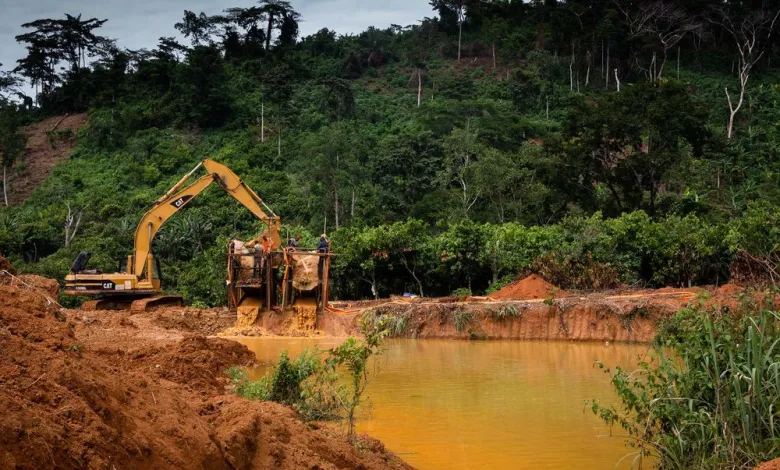
Ghana is pursuing a similar recalibration. As Africa’s leading gold producer, the country has announced its most significant overhaul of mining legislation in nearly two decades. The reforms include shorter, time-bound mining licences, direct revenue-sharing mechanisms for host communities, and stricter environmental and social performance requirements tied to licence renewal.
Under the new framework, a portion of mining revenues will flow directly to local communities through fixed-percentage contributions, replacing discretionary development agreements. The reforms also seek to clarify licensing regimes for mid-tier operators and revisit stability agreements to better align fiscal terms with project lifecycles.
Ghana’s local content laws further reinforce domestic participation, reserving certain mining activities exclusively for Ghanaian-owned companies. For surface mining contracts, full Ghanaian ownership is required, while underground operations must maintain at least 30% local ownership.
At the same time, policymakers remain mindful of the risks associated with Ghana’s heavy dependence on gold, which accounts for nearly 90% of mineral export revenues. While high gold prices have provided a buffer in recent years, they also expose the economy to commodity price volatility.
To mitigate this risk, Ghana is working to broaden its mineral base. Commercial lithium discoveries have opened new opportunities, while renewed investment is being directed toward manganese and bauxite production, alongside early-stage exploration for copper. The strategy is to use current gold revenues to finance a more diversified and resilient mining sector.
These sectoral reforms have been supported by improving macroeconomic conditions. The stabilisation of the cedi, rebuilding of foreign reserves, and a more predictable policy environment have strengthened investor confidence, reinforcing Ghana’s position as a viable long-term mining jurisdiction.
Together, developments in Botswana and Ghana reflect a wider continental shift. The African Union’s recently launched Green Minerals Strategy underscores this direction, calling for value addition at source, regional industrialisation, and climate-resilient growth anchored in Africa’s mineral wealth.
Rather than retreating from global capital, African countries are redefining the terms of engagement—making partnerships more transparent, aligning investment with national priorities, and embedding mining within broader development goals. For investors willing to adapt, the continent’s mining sector is increasingly positioned as a cornerstone of one of the most significant industrial transitions of the coming decades.