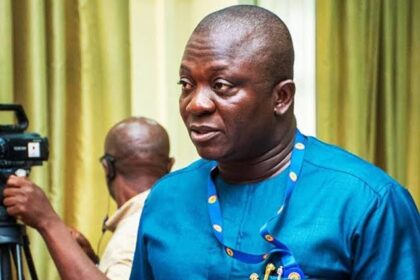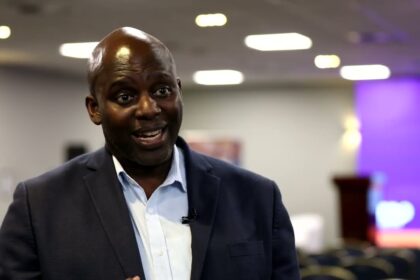




The Attorney-General and Minister for Justice, Dr. Dominic Akuritinga Ayine, has rejected claims that his office has ceased prosecuting members of the governing National Democratic Congress (NDC), insisting that decisions on criminal cases are based solely on legal merit and evidence, not political affiliation.
Dr. Ayine’s remarks come amid public debate over the discontinuation of several high-profile cases that were instituted before he assumed office — including matters involving prominent individuals previously linked to the NDC government.
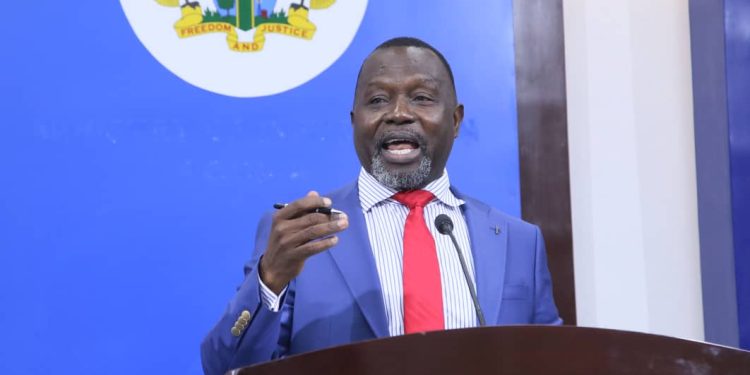
At a press briefing outlining why certain cases were dropped or withdrawn, the Attorney-General emphasized that his actions are governed by objective legal considerations. He explained that some cases were discontinued because investigations were flawed or insufficiently supported by evidence, making it inappropriate to proceed to trial.
He stressed that prosecutorial discretion must be exercised responsibly and ethically, and not as a vehicle for politically motivated prosecutions or delays.
Dr. Ayine also addressed criticism that the discontinuation of these prosecutions suggests a reluctance to hold NDC members accountable. He firmly rejected such claims, describing them as unfounded and urging the public to judge his performance on future actions rather than political speculation. He pointed out that his office continues to pursue prosecutions wherever the evidence met the legal threshold and that withdrawing weak cases is consistent with ensuring justice rather than pursuing cases that cannot legitimately be sustained in court.
In defending his decisions, the Attorney-General reiterated that prosecutions — including those of high-profile suspects — remain possible in the future should new or stronger evidence emerge. He also highlighted legal principles guiding discretionary withdrawal of cases, underscoring that such actions do not amount to immunity for any person.
The debate reflects ongoing tension over Ghana’s broader anti-corruption efforts, with some analysts arguing that dropping cases could weaken deterrence, while supporters of the Attorney-General’s approach say it reinforces the need for strong evidence and proper investigations before court proceedings are pursued.
Dr. Ayine’s office has stated repeatedly that decisions on prosecutions — past and future — are being made independently of political considerations, as part of its mandate to uphold the rule of law and protect the integrity of the justice system.